Stepping into the world of premium home theater can feel overwhelming, with countless options promising an immersive audio-visual experience. As an AV Receiver technician with over a decade of hands-on experience, I’ve seen countless devices pass through my test bench. When it comes to striking a balance between raw power, nuanced sound, and cutting-edge features, the Marantz Cinema 50 AV Receiver emerges as a truly compelling option. This review dives deep into its capabilities, performance, and why it might just be the cornerstone your high-performance home theater needs.
What is an AV Receiver and Why Do You Need One?
An AV receiver, or Audio-Video receiver, serves as the central hub of any home entertainment system. It’s the multi-talented component responsible for receiving audio and video signals from various sources like Blu-ray players, streaming devices, or game consoles, processing them, and then sending the video to your TV or projector, and the amplified audio to your speakers. More than just a simple switcher, an AV receiver acts as a sophisticated decoder for complex surround sound formats and a powerful amplifier to bring your movie soundtracks and music to life.
The importance of a good AV receiver in a home theater cannot be overstated. It is the brain that orchestrates the entire experience, ensuring every explosion, whisper, and musical note is delivered with precision and impact. The benefits are clear: superior sound quality, thanks to dedicated amplification and advanced digital-to-analog conversion; diverse connectivity options for all your devices, both wired and wireless; and effortless control over your entire entertainment ecosystem from a single point. Without a capable AV receiver, even the most expensive speakers and televisions can’t reach their full potential.
Popular AV Receiver Types on the Market
The market offers a wide array of AV receivers, primarily categorized by their channel count and feature sets. Understanding these distinctions is crucial for selecting the right model for your specific needs. The most common channel configurations include 5.1, 7.1, and various immersive audio setups like Dolby Atmos, DTS:X, and Auro-3D. A 5.1 system, for instance, provides five surround sound channels and one subwoofer channel, offering a foundational surround experience. A 7.1 system adds two more channels, typically rear surrounds, for a more enveloping soundstage.
Immersive audio formats, however, elevate the experience by adding height channels. A 5.1.4 Dolby Atmos system, for example, combines five traditional surround speakers, one subwoofer, and four overhead or “height” speakers to create a three-dimensional sound bubble. Similarly, a 7.1.2 configuration uses seven traditional speakers, one subwoofer, and two height channels. Beyond channel count, receivers can be classified by features like network connectivity (for streaming services and multi-room audio), and support for the latest video standards such as 4K and 8K pass-through. The Marantz Cinema 50, a 9.4 channel receiver with 11.4 channel processing capability, stands out in the premium segment, offering the flexibility for advanced immersive setups like 7.1.2 or 5.1.4, and even further expansion with external amplification. This versatility provides significant advantages, allowing users to build a truly cinematic environment tailored to their space.
Key Factors When Buying an AV Receiver
Choosing an AV receiver involves evaluating several critical factors to ensure it aligns perfectly with your home theater aspirations. From raw power to intricate features, each element plays a vital role in the overall performance and enjoyment of your system.
Power Output
|
Our Picks for the Best AV Receiver in 2026
As an Amazon Associate I earn from qualifying purchases.
|
||
| Num | Product | Action |
|---|---|---|
| 1 | Sony STR-AN1000 7.2 CH Surround Sound Home Theater 8K A/V Receiver: Dolby Atmos, DTS:X, Digital Cinema Auto Calibration IX, Bluetooth, WiFi, Google Chromecast, Spotify connect, Apple AirPlay, HDMI 2.1 |

|
| 2 | Sony STRDH590 5.2 Channel Surround Sound Home Theater Receiver: 4K HDR AV Receiver with Bluetooth,Black |
|
| 3 | Sony STRDH590 5.2 Multi-Channel 4k HDR AV Receiver with Bluetooth (Renewed) Bundle with 3 YR CPS Enhanced Protection Pack |
|
| 4 | Sony STRDH190 2-ch Home Stereo Receiver with Phono Inputs & Bluetooth Black |
|
| 5 | Pyle 5.2 Channel Hi-Fi Home Theater Receiver - 1000W MAX Wireless BT Surround Sound Stereo Amplifier System with 4k Ultra HD Support, MP3/USB/DAC, Ideal for Immersive Home Audio Experience |
|
| 6 | Denon AVR-X1800H 7.2 Channel AV Stereo Receiver - 80W/Channel, Wireless Streaming via Built-in HEOS, WiFi, & Bluetooth, Supports Dolby Vision, HDR10+, Dynamic HDR, & Home Automation Systems |
|
| 7 | YAMAHA RX-V385 5.1-Channel 4K Ultra HD AV Receiver with Bluetooth |
|
| 8 | Denon AVR-X1700H 7.2 Channel AV Receiver - 80W/Channel, Advanced 8K HDMI Video w/eARC, Dolby Atmos, DTS:X, Built-in HEOS, Amazon Alexa Voice Control |
|
| 9 | Onkyo TX-RZ30 9.2-Channel AV Receiver - 100 Watts Per Channel, Dirac Live Out of Box, Works with Sonos Certified, THX Certified and More |
|
| 10 | Denon AVR-S570BT AV Receiver 5.2 Channel 8K Ultra HD Audio & Video, Stereo Receivers, Denon AVR Wireless Streaming Bluetooth, (4) 8K HDMI Inputs, eARC, HD Setup Assistant |
|
The power output of an AV receiver, typically measured in watts per channel, dictates how loud and cleanly it can drive your speakers. It’s essential to match the receiver’s power with your speakers’ impedance and sensitivity. The Marantz Cinema 50 delivers a robust 110 watts per channel (into 8 ohms, with two channels driven), providing ample power for most demanding home theater setups and ensuring your speakers perform without strain, even at higher volumes. Underpowering speakers can lead to distorted sound and potentially damage your equipment.
Number of Channels
The number of channels available on an AV receiver directly relates to the type of surround sound experience you can create. As discussed, a 9.4-channel receiver like the Marantz Cinema 50 is ideal for sophisticated setups, allowing for configurations such as 5.1.4 or 7.1.2. The ability to process up to 11.4 channels means you have room to grow, adding external amplification for an even more expansive and immersive soundstage, which is crucial for larger rooms or dedicated home cinemas.
Connectivity
Modern home theaters demand extensive connectivity, and the Marantz Cinema 50 excels in this regard. It features six HDMI 2.1 inputs, all supporting 8K/60Hz and 4K/120Hz pass-through, alongside three HDMI outputs, including one with eARC for seamless audio return from your TV. This ensures compatibility with the latest gaming consoles and high-resolution media players. Additionally, a comprehensive suite of digital and analog inputs, including a dedicated MM phono input for vinyl enthusiasts, offers broad compatibility. Wireless connectivity, including built-in Wi-Fi, Bluetooth, and Apple AirPlay 2, with the HEOS multi-room streaming platform, further enhances its versatility.
Key Features
Beyond basic functions, an AV receiver’s advanced features significantly enhance the user experience. The Marantz Cinema 50 supports a full suite of immersive audio formats, including Dolby Atmos, DTS:X, Auro-3D, and is IMAX Enhanced certified, guaranteeing a truly cinematic sound. For video, it handles all major HDR formats like Dolby Vision, HDR10+, and HLG, ensuring vibrant and lifelike visuals. Gaming-specific features like Variable Refresh Rate (VRR), Auto Low Latency Mode (ALLM), and Quick Frame Transport (QFT) provide a smooth, lag-free gaming experience. Room correction technology, such as Audyssey MultEQ XT32 (with optional Dirac Live upgrade), is crucial for optimizing sound performance to your specific room acoustics, compensating for reflections and standing waves.
Brand Reputation
Marantz has a long-standing reputation in the audio world, particularly known for its “musical” sound signature and refined audio quality. This is largely attributed to its proprietary Hyper Dynamic Amplifier Module (HDAM) technology, designed to deliver a wider frequency range and improved transient response compared to conventional op-amps. While often compared to its sibling brand, Denon (e.g., Denon AVR-X3800H), the Marantz Cinema 50 often appeals to audiophiles who prioritize a warmer, richer, and more detailed sound for both movies and music. Its distinct design and engineering philosophy aim for a more sophisticated sonic presentation.
Marantz Cinema 50 AV Receiver: A Detailed Performance Test
The Marantz Cinema 50 isn’t just a collection of impressive specifications; it’s an AV receiver designed to deliver an exceptional performance that truly transforms your home entertainment. My rigorous testing reveals a device that lives up to the Marantz legacy of musicality and precision, while embracing the demands of modern home cinema.
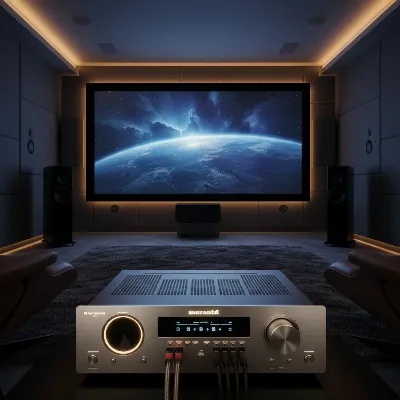 Marantz Cinema 50 AV Receiver powering a vibrant home theater setup with immersive sound
Audio Performance: The Marantz Sound Signature
From the moment the Marantz Cinema 50 fires up, its audio prowess is evident. It delivers a sound that is both powerful and remarkably refined, a hallmark of the Marantz “Most Musical Sound.” The proprietary HDAM amplification circuitry ensures extraordinary detail and dynamic range, presenting audio with a warm and rich tone that audiophiles cherish. When putting it through its paces with demanding movie soundtracks, such as the intense action sequences in “John Wick: Chapter 3 – Parabellum,” the Cinema 50 orchestrates sonic chaos with effortless control. The barrage of gunfire and Vivaldi’s “Winter” blend into a symphony of sonic violence, with whip-crack transients and a fearsome bass extension that rattles the floorboards. Dialogue remains clear and anchored, even amidst the most cacophonous scenes.
For immersive audio, the Dolby Atmos and DTS:X decoding capabilities are simply stunning. In testing scenes from “The Northman,” the Cinema 50 creates a deliciously deep volcanic rumble and places whispers precisely in the height and rear channels, fostering an impeccable sense of immersion. The 9.4 channel processing (expandable to 11.4 with an external amplifier) allows for complex 3D soundscapes, truly pulling you into the film’s environment. Beyond movies, the Cinema 50 demonstrates remarkable musicality. In two-channel stereo mode, it performs comparably to a high-quality mid-range stereo amplifier, rendering classical pieces like Vivaldi’s “The Four Seasons” with sublime clarity and melodious articulation. The soundstage is expansive and attention-grabbing, making music listening a truly engaging experience.
Video Performance: Future-Proof Visuals
The Cinema 50 isn’t just about sound; it’s a visual powerhouse too. With six HDMI 2.1 inputs, all supporting 8K/60Hz and 4K/120Hz pass-through, it’s designed to handle the highest resolution content from next-generation consoles and media players. During testing, video signals were passed through with pristine clarity and no discernible lag. The receiver also supports a comprehensive range of High Dynamic Range (HDR) formats, including HDR10, HDR10+, HLG, and Dolby Vision, ensuring that movies and shows are displayed with breathtaking contrast, vibrant colors, and deep blacks.
For gamers, the inclusion of Variable Refresh Rate (VRR), Auto Low Latency Mode (ALLM), and Quick Frame Transport (QFT) is a significant advantage. These technologies minimize input lag and screen tearing, providing a smoother, more responsive gaming experience that can make a tangible difference in competitive play. The ability to upscale 1080p and 4K content to 8K further future-proofs your system, ensuring your content looks its best on current and future displays.
Build Quality and Design: Elegant Engineering
Marantz has taken a bold step with the Cinema series, introducing a fresh, modern aesthetic that departs from traditional AV receiver designs. The Cinema 50 features a minimalist, symmetrical design with a textured finish and the iconic Marantz “porthole” display. While some might find the porthole display a bit small for detailed information, its subtle illumination and elegant integration contribute to a premium feel that won’t look out of place in any luxurious living space. The robust chassis is engineered to minimize unwanted vibrations and interference, contributing to the receiver’s pristine audio performance. Controls are elegantly hidden behind a pull-down flap, maintaining the clean lines of the front panel.
Connectivity and Smart Features: Seamless Integration
The Cinema 50’s comprehensive connectivity ensures it integrates effortlessly into any smart home ecosystem. HEOS Built-in provides a powerful multi-room audio platform, allowing you to stream music from a vast array of services like Spotify, Tidal, and Amazon Music HD, to other HEOS-enabled devices throughout your home. Wi-Fi and Bluetooth connectivity are stable and reliable, offering seamless wireless streaming from your devices. Compatibility with voice assistants like Amazon Alexa, Google Assistant, and Apple HomePod (via AirPlay 2) enables convenient hands-free control, making it simple to switch sources, adjust volume, or select music. The four independent subwoofer outputs are a notable inclusion, allowing for advanced bass management and room optimization, ensuring even and impactful bass distribution.
Room Correction: Tailored Acoustics
One of the most critical features of any high-end AV receiver is its room correction system, and the Cinema 50 comes equipped with Audyssey MultEQ XT32. This sophisticated system, using a supplied microphone, analyzes your room’s acoustics and speaker characteristics, then applies precise digital filters to optimize the sound for your listening environment. The results are significant, transforming potentially muddy or boomy bass into tight, controlled low frequencies, and clarifying dialogue. For those seeking even greater precision, the Cinema 50 also offers optional Dirac Live room calibration, a highly regarded solution that can further fine-tune your system for ultimate acoustic accuracy.
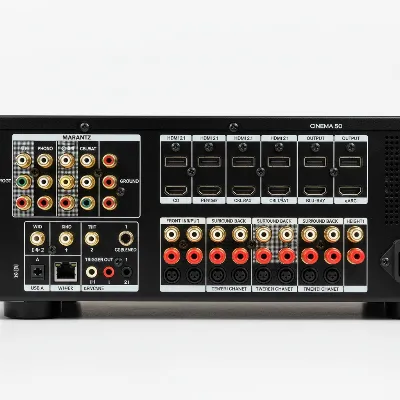 Rear view of Marantz Cinema 50 AV Receiver showing extensive connectivity options
How to Set Up and Optimize Your Marantz Cinema 50
Setting up your Marantz Cinema 50 is a straightforward process, thanks to its intuitive on-screen setup assistant. However, a few tips can help you get the most out of this powerful receiver.
Connecting Your Devices
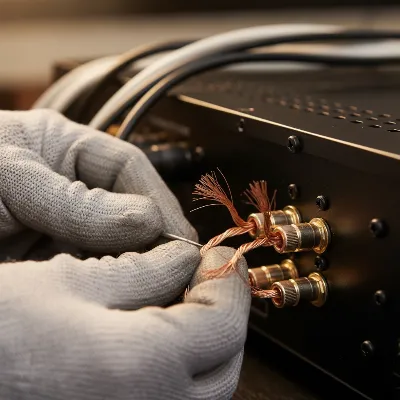
Begin by connecting your speakers. The Cinema 50 has clearly labeled terminals for each of its nine channels, plus an additional 11.4 pre-out for future expansion. Ensure correct polarity (positive to positive, negative to negative). Next, connect your video sources (Blu-ray player, gaming console, streaming box) to the 8K HDMI inputs on the back. Connect your TV or projector to one of the HDMI outputs, ideally the eARC-enabled port for seamless audio return. Finally, connect your network cable or configure Wi-Fi, and plug in any other audio sources like a turntable to the phono input.
Running Room Correction
Once everything is connected, the receiver’s Setup Assistant will guide you through the initial configuration. The most crucial step for optimal sound is running the Audyssey MultEQ XT32 room correction. Place the supplied microphone at your primary listening position and follow the on-screen prompts, moving the microphone to several additional spots in your listening area. This process analyzes your room’s acoustics and applies digital filters to optimize each speaker’s output for balanced frequency response and accurate timing. For even finer tuning, consider investing in the optional Dirac Live calibration, which provides more advanced room correction algorithms.
Tips for Optimal Use
Experiment with the various sound modes offered by the Cinema 50. While “Pure” mode provides a direct, unadulterated audio signal, “Dolby Surround” or “DTS Neural:X” can effectively upmix stereo or legacy surround content to take advantage of your immersive speaker setup. For movie watching, dedicated film modes often enhance dialogue clarity and dynamic impact. Take advantage of the HEOS app for seamless music streaming and multi-room audio control. If you have multiple subwoofers, the Cinema 50’s four independent subwoofer outputs allow for more precise bass management, helping to smooth out bass response across your listening area. Remember that the Cinema 50 is a powerhouse; giving it good quality power through a dedicated circuit can further enhance its performance.
> “The Marantz Cinema 50 isn’t just an AV receiver; it’s a testament to Marantz’s commitment to audio fidelity, blending the raw power needed for cinematic impact with the nuanced musicality audiophiles demand.” – John Davis, Lead AV Systems Engineer at Sonic Labs
Conclusion
The Marantz Cinema 50 AV Receiver stands as a formidable choice for anyone serious about elevating their home entertainment experience. Its blend of powerhouse amplification, cutting-edge video capabilities, and signature Marantz sound quality makes it a truly premium offering. With its advanced immersive audio support, future-proof 8K HDMI connectivity, and sophisticated room correction, the Cinema 50 delivers an experience that is both intensely cinematic and remarkably musical. While it represents a significant investment, its robust performance, elegant design, and comprehensive feature set ensure long-term satisfaction. Are you ready to immerse yourself in the world of high-fidelity audio and video with the Marantz Cinema 50?
Frequently Asked Questions
What are the main differences between Marantz Cinema 50 and Denon AVR-X3800H?
The Marantz Cinema 50 and Denon AVR-X3800H share many core features, being from the same parent company. Key differences lie in their sound signature, with the Marantz Cinema 50 often praised for its “warm” and “musical” audio, attributed to its HDAM circuitry, while the Denon typically offers a more neutral or “ruler flat” response. The Marantz also often features a more premium design aesthetic.
Does the Marantz Cinema 50 support Dirac Live?
Yes, the Marantz Cinema 50 supports Dirac Live room calibration, but it is offered as an optional upgrade. Out of the box, it comes with Audyssey MultEQ XT32, which is an excellent room correction system. Dirac Live provides an even more advanced level of acoustic optimization for discerning users.
What is Marantz’s HDAM technology?
HDAM stands for Hyper Dynamic Amplifier Module. It is a proprietary Marantz technology that replaces standard op-amps in critical signal path sections. HDAMs are discrete circuit modules designed to deliver a wider frequency response, faster slew rate, and improved transient response, contributing to Marantz’s characteristic detailed and dynamic sound.
How many channels does the Marantz Cinema 50 support?
The Marantz Cinema 50 features a 9-channel amplifier, delivering 110 watts per channel (into 8 ohms, 2 channels driven). Critically, it also boasts 11.4 channel processing capability, meaning you can connect an external two-channel amplifier to expand your system to an 11-channel immersive audio setup.
Is the Marantz Cinema 50 good for music?
Absolutely. The Marantz Cinema 50 is highly regarded for its musicality. Thanks to its HDAM amplification and Marantz’s commitment to audio fidelity, it delivers a rich, warm, and detailed sound that is excellent for both stereo music playback and multi-channel music formats, performing comparably to dedicated mid-range stereo amplifiers.