The best budget AV receivers under $500 for 2026 include models like the Denon AVR-S670H, Yamaha RX-V4A, and Sony STR-DH790, offering impressive features such as 4K/8K passthrough, Dolby Atmos virtualization, and robust connectivity. These receivers provide exceptional performance and value, proving that a cinematic audio experience is achievable without a premium price tag, typically delivering 5.2 or 7.2 channels of immersive sound for home theater enthusiasts.
What is an AV Receiver? Why Do You Need One?
An AV receiver, short for Audio/Video receiver, serves as the central hub of any home theater system, managing all audio and video signals. Its primary function is to receive audio and video inputs from various sources—like Blu-ray players, gaming consoles, and streaming devices—process them, amplify the audio, and then send the video to your TV or projector, and the amplified audio to your loudspeakers. Without an AV receiver, creating a true surround sound experience or easily managing multiple media components would be nearly impossible.
The importance of an AV receiver in your home setup cannot be overstated. It acts as the brain, orchestrating high-quality sound and picture. Benefits include superior sound quality through dedicated amplification and digital audio decoding (like Dolby Atmos and DTS:X), diverse connectivity options for all your devices, and simplified control of your entire entertainment system via a single remote or app. These devices transform passive viewing into an engaging, dynamic experience, making every movie night feel like a trip to the cinema.
Popular Types of AV Receivers on the Market
AV receivers come in various configurations, primarily distinguished by their channel count and feature sets. Understanding these differences is crucial when making a choice, especially within a budget.
When categorized by channel count, you’ll typically find:
- 5.1 Channel Receivers: These are the most common entry-level options, supporting a center speaker, two front speakers, two surround speakers, and a subwoofer. They are excellent for smaller to medium-sized rooms, offering a significant upgrade over TV speakers.
- 7.1 Channel Receivers: Adding two more speakers (rear surrounds) for a fuller soundstage, 7.1 systems provide a more immersive experience, particularly in larger rooms or for content with richer surround sound mixes.
- Dolby Atmos/DTS:X Capable Receivers: These can be 5.1.2, 7.1.2, or even higher, where the last number indicates “height” channels. These receivers support object-based audio formats, creating a three-dimensional sound field that literally makes sound appear to come from above, offering the most enveloping audio experience available. Many budget options use “virtualization” technology to simulate height effects without physical ceiling speakers.
Features also differentiate models significantly:
- Networked Receivers (with Wi-Fi/Ethernet): These offer internet connectivity for streaming music services (Spotify, Tidal), firmware updates, and multi-room audio technologies like AirPlay 2 or HEOS.
- 4K/8K Passthrough & Upscaling: Modern receivers should at least support 4K UHD video passthrough, with HDR (HDR10, Dolby Vision, HLG) compatibility being standard. Some newer budget models, like the Denon AVR-S670H, even boast 8K/60Hz passthrough and upscaling capabilities, future-proofing your setup.
The trade-offs typically involve channel count, advanced processing (like full Dolby Atmos vs. virtualization), and network features. While a 5.1 channel receiver might lack the ultimate immersion of a 7.1.2 setup, it can still provide fantastic sound for most rooms, especially when paired with good speakers.
Key Factors to Consider When Buying an AV Receiver
Choosing the right AV receiver involves balancing several technical specifications with your personal needs and room acoustics. Pay close attention to these critical factors to make an informed decision within your $500 budget.
Power
|
Our Picks for the Best AV Receiver in 2026
As an Amazon Associate I earn from qualifying purchases.
|
||
| Num | Product | Action |
|---|---|---|
| 1 | YAMAHA RX-V385 5.1-Channel 4K Ultra HD AV Receiver with Bluetooth |

|
| 2 | Denon AVR-S570BT AV Receiver 5.2 Channel 8K Ultra HD Audio & Video, Stereo Receivers, Denon AVR Wireless Streaming Bluetooth, (4) 8K HDMI Inputs, eARC, HD Setup Assistant |
|
| 3 | Sony STR-AN1000 7.2 CH Surround Sound Home Theater 8K A/V Receiver: Dolby Atmos, DTS:X, Digital Cinema Auto Calibration IX, Bluetooth, WiFi, Google Chromecast, Spotify connect, Apple AirPlay, HDMI 2.1 |
|
| 4 | Sony STRDH590 5.2 Channel Surround Sound Home Theater Receiver: 4K HDR AV Receiver with Bluetooth,Black |
|
| 5 | Denon AVR-X1800H 7.2 Channel AV Stereo Receiver - 80W/Channel, Wireless Streaming via Built-in HEOS, WiFi, & Bluetooth, Supports Dolby Vision, HDR10+, Dynamic HDR, & Home Automation Systems |
|
| 6 | Pyle 5.2 Channel Hi-Fi Home Theater Receiver - 1000W MAX Wireless BT Surround Sound Stereo Amplifier System with 4k Ultra HD Support, MP3/USB/DAC, Ideal for Immersive Home Audio Experience |
|
| 7 | Sony STRDH190 2-ch Home Stereo Receiver with Phono Inputs & Bluetooth Black |
|
| 8 | Onkyo TX-RZ30 9.2-Channel AV Receiver - 100 Watts Per Channel, Dirac Live Out of Box, Works with Sonos Certified, THX Certified and More |
|
| 9 | Denon AVR-X1700H 7.2 Channel AV Receiver - 80W/Channel, Advanced 8K HDMI Video w/eARC, Dolby Atmos, DTS:X, Built-in HEOS, Amazon Alexa Voice Control |
|
| 10 | Sony STRDH590 5.2 Multi-Channel 4k HDR AV Receiver with Bluetooth (Renewed) Bundle with 3 YR CPS Enhanced Protection Pack |
|
The power output of an AV receiver, measured in watts per channel (WPC), indicates how loud and clearly it can drive your speakers. More power isn’t always better; what truly matters is finding a receiver with sufficient power to match your speakers’ sensitivity and the size of your room. For a typical medium-sized living room (around 30 sq.m.), an amplification power of about 50W per channel is often recommended, roughly 1.5W per square meter. Look for ratings at a specific impedance (e.g., 8 Ohms) and with a low Total Harmonic Distortion (THD) percentage, ideally below 0.1%, as this indicates cleaner sound at higher volumes. A receiver with a bit more power than your speakers can actually help minimize distortion by operating less strenuously.
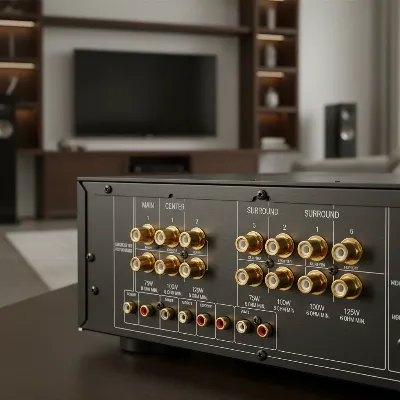 A close-up of an AV receiver’s rear panel with speaker wire connections, showing wattage and impedance ratings clearly labeled, set in a modern home theater environment with soft, ambient lighting. Realistic style.
Number of Channels
The number of channels (e.g., 5.1, 7.2) dictates how many speakers and subwoofers your receiver can support, directly impacting the immersive quality of your surround sound. For most users, a 5.1 setup is a solid starting point, providing distinct sound separation for movies and music. If you have a larger room or desire a more enveloping experience, a 7.1 or 7.2 channel receiver allows for additional side or rear surround speakers and dual subwoofers for more even bass distribution. For modern 3D audio like Dolby Atmos or DTS:X, look for configurations like 5.1.2 or 7.1.2, where the third number indicates height channels. Many budget receivers utilize virtualization technologies to simulate these height effects without requiring physical overhead speakers, which can be a great cost-saving measure.
Connectivity
Modern AV receivers serve as the central hub for all your media devices, making diverse connectivity options paramount. HDMI is the most crucial, handling both high-definition audio and video. Aim for a receiver with at least four HDMI inputs, with one output supporting ARC (Audio Return Channel) or eARC (Enhanced Audio Return Channel) to simplify connecting your TV. For future-proofing, look for HDMI 2.1 ports that support 4K/120Hz and 8K/60Hz passthrough, along with HDR formats like HDR10+, Dolby Vision, and HLG. Beyond HDMI, optical and coaxial digital audio inputs are useful for older devices, while RCA inputs remain essential for analog sources like CD players or turntables. Wireless connectivity, including Bluetooth for quick smartphone streaming and Wi-Fi for access to streaming services (Spotify, Tidal) and multi-room audio, is also a highly desirable feature in 2026.
Features
While budget receivers might not pack every high-end feature, many offer crucial technologies that enhance your audio-visual experience.
- Dolby Atmos and DTS:X: These object-based audio formats deliver truly immersive, three-dimensional soundscapes. Even if you don’t have dedicated height speakers, many budget models include virtualization technologies (e.g., Dolby Atmos Height Virtualizer, DTS Virtual:X) to simulate this effect.
- HDR Support: Ensure the receiver supports modern HDR formats like HDR10, Dolby Vision, and HLG to enjoy vibrant colors and contrast with compatible content.
- Room Calibration: Automated room correction systems, such as Audyssey MultEQ (Denon) or YPAO (Yamaha), use a microphone to analyze your room’s acoustics and automatically adjust speaker levels, distances, and equalization for optimal sound. This feature is invaluable for any home theater enthusiast, especially beginners.
- Streaming & Voice Control: Integrated Wi-Fi allows access to popular music streaming services, while compatibility with voice assistants like Alexa or Google Assistant offers convenient hands-free control.
Brand
Several reputable brands consistently produce quality AV receivers across various price points. Within the under-$500 segment, Denon, Yamaha, Sony, Onkyo, and Pioneer are leading contenders, each with distinct characteristics:
- Denon: Often lauded for a balanced, warm, and dynamic sound, Denon receivers like the AVR-S670H provide excellent build quality and user-friendly features, including Audyssey room correction and HEOS multi-room audio.
- Yamaha: Known for a clean, transparent, and sometimes “crystalline” sound profile, Yamaha models such as the RX-V4A excel in precise sound imaging and offer their proprietary YPAO room calibration and MusicCast streaming.
- Sony: Sony’s budget receivers, like the STR-DH790, are popular for their strong feature sets, often including Dolby Atmos/DTS:X, and a distinct sound signature characterized by clear highs and balanced mid-tones, all in a compact form factor.
- Onkyo: Audiophiles on a budget often favor Onkyo for their focus on robust audio performance and high-quality DACs, delivering a powerful and well-rounded sound for both movies and music. Models like the TX-SR494 frequently offer advanced virtualization features.
- Pioneer: Pioneer offers receivers like the VSX-534 which are known for modern features in compact designs, often incorporating advanced room calibration systems and virtual surround technologies like Dolby Atmos and DTS:X virtualization.
> “When choosing a budget AV receiver, don’t just chase the highest wattage. Focus on features that genuinely enhance your core experience, like accurate room calibration and modern HDMI connectivity, which often make a bigger impact than raw power numbers.” – Frederick Douglass, Senior Home Entertainment Expert, DownHomeDigital.net
Comparing the Best Budget AV Receivers Under $500 for 2026
The budget AV receiver market in 2026 continues to offer impressive value, with several models standing out for their feature sets, performance, and reliability. Here’s a comparison of some of the best options you can consider, drawing from expert reviews and current market trends.
| Model | Channels | Power Output (WPC/Ohms) | HDMI In/Out | Bluetooth/Wi-Fi | Key Features | Pros | Cons |
|---|---|---|---|---|---|---|---|
| Denon AVR-S670H | 5.2 | 75W/8 Ohm, 100W/6 Ohm | 6/1 | Yes/Yes | 8K/60Hz, 4K/120Hz Passthrough, Audyssey MultEQ, Dolby Atmos/DTS:X Virtual., HEOS, Voice Control | Excellent sound clarity, numerous HDMI inputs, 8K support, robust wireless features, user-friendly calibration | 8K upscaling inconsistent, app needs refinement, design can trap dirt |
| Yamaha RX-V4A | 5.2 | 80W/6 Ohm | 4/1 | Yes/Yes | 4K/120Hz, 8K/60Hz Passthrough, YPAO, MusicCast, Dolby Atmos/DTS:X Virtual. | Clear, crisp sound, intuitive setup, excellent for movies, attractive new design | Doesn’t support native DTS:X/Dolby Atmos (virtual only), sometimes weak for rock/symphony |
| Sony STR-DH790 | 7.2 | 90W/6 Ohm, 145W/6 Ohm | 4/1 | Yes/No | Dolby Atmos/DTS:X, 4K/60Hz Passthrough, Auto-Calibration, Slim Profile | Immersive 7.2 sound, compact design, supports newer audio formats, good for first-time users | No Wi-Fi, basic plastic build, 4K/60Hz max (not 120Hz), no 8K |
| Onkyo TX-SR494 | 7.2 | 80W/8 Ohm, 160W/6 Ohm | 4/1 | Yes/No | Dolby Atmos/DTS:X, AccuEQ, Dolby Atmos Height Virtualizer, Zone 2 Power | Powerful surround sound, dedicated Zone 2, great for movies, effective room calibration | No Wi-Fi, dialogues can merge with background noise, less efficient for music |
| Denon AVR-S570BT | 5.2 | 70W/channel | 48K Ready HDMI | Yes/No | 4K/8K Ready HDMI, Simple Setup Assistant | Undisputed value king, purely focused on fundamentals, low noise floor, easy setup | Lacks Wi-Fi, fewer advanced network features |
| Pioneer VSX-534 | 5.2 | 80W/channel | 4/1 | Yes/No | Dolby Atmos/DTS:X Virtualization, MCACC Room Calibration, Slim Design | Compact, modern feature set, effective virtualization, professional room tuning | No Wi-Fi, older HDMI ports mentioned in earlier models, may lack eARC |
Each of these receivers offers a strong proposition within the sub-$500 category, but their strengths lie in different areas. The Denon AVR-S670H stands out for its extensive connectivity and 8K readiness, making it a robust choice for future-proofed setups. The Yamaha RX-V4A is a solid all-rounder with excellent sound for movies and an intuitive user experience. For those prioritizing immersive surround sound and a slim form factor without needing Wi-Fi, the Sony STR-DH790 is a compelling option. The Onkyo TX-SR494 offers 7.2 channels and Zone 2 power for multi-room audio, ideal for home theater focus. Meanwhile, the Denon AVR-S570BT is an excellent “value king” for core essentials, and the Pioneer VSX-534 offers modern features in a compact, user-friendly package.
Your Ultimate Buying Guide for an AV Receiver
Navigating the options can be complex, but a structured approach ensures you pick the perfect AV receiver for your home. Follow these steps to make a confident purchase.
Define Your Needs
Before diving into specifications, clarify what you expect from your AV receiver.
- Room Size: A larger room typically requires more power and potentially more channels (e.g., 7.1 or height channels) for immersive sound. For smaller spaces, a 5.1 setup can be perfectly adequate.
- Number of Speakers: Do you plan a basic 5.1 system or something more elaborate? This dictates the required channel count.
- Primary Use: Is your main focus movies, music, gaming, or a balanced mix? Some receivers excel in cinematic impact, while others offer superior music fidelity.
- Sources: List all devices you plan to connect (Blu-ray, console, streaming box, turntable, etc.) to determine the necessary number and type of inputs.
Set Your Budget
While this guide focuses on receivers under $500, setting a precise sub-budget helps narrow choices further. Remember that the receiver is just one component; factor in costs for speakers, cables, and potential accessories. Sticking to your budget is crucial, but don’t shy away from spending a little more if a slightly pricier model offers a significant, must-have feature that truly enhances your experience.
Research Thoroughly
The information in this guide provides a strong foundation, but always cross-reference. Read multiple reviews from reputable audio-visual publications and user forums. Pay attention to common praise and recurring complaints about specific models. Look for hands-on tests that align with your intended use cases. Online comparison tools can help you visualize differences in features and specifications between models.
Buy from Reputable Retailers
Purchase your AV receiver from authorized dealers, whether online or brick-and-mortar. This ensures you receive genuine products, benefit from manufacturer warranties, and have access to reliable customer support if issues arise. Avoid unauthorized sellers or suspiciously low prices, which could indicate refurbished or counterfeit goods without proper support.
Inspect Before Purchase
If buying in person, or immediately upon delivery for online purchases, thoroughly inspect the product. Check for any physical damage, ensure all accessories are included (like the remote, setup microphone, and manual), and verify that all necessary ports are present and appear functional. For peace of mind, understand the retailer’s return policy.
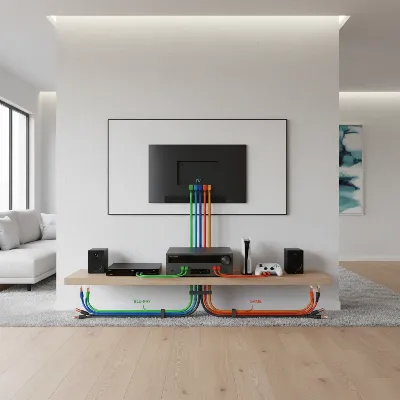 A wide shot of a neatly organized home theater rack, highlighting the various cables connected to an AV receiver from a TV, game console, and streaming device, with speaker wires meticulously arranged. Illustrative style.
Setting Up and Using Your AV Receiver
Once you’ve chosen your budget-friendly AV receiver, proper setup is key to unlocking its full potential. While specific steps may vary slightly by model, the general process is straightforward.
1. Placement: Position your receiver in a well-ventilated area, avoiding enclosed cabinets where heat can build up.
2. Connecting Speakers: Use appropriate speaker wire to connect each speaker to its corresponding terminal on the receiver, ensuring correct polarity (positive to positive, negative to negative). For a 5.1 system, you’ll connect front left/right, center, surround left/right, and a subwoofer.
3. Connecting Sources: Use HDMI cables to connect your video sources (Blu-ray player, gaming console, streaming stick) to the HDMI input ports on the receiver. Then, connect one HDMI cable from the receiver’s HDMI output (usually labeled “Monitor Out” or “ARC/eARC”) to your TV’s HDMI input, preferably the one designated for ARC/eARC.
4. Power On & Initial Setup: Turn on your TV and receiver. Follow the on-screen setup assistant, which will guide you through basic configurations. This typically includes speaker detection, input assignment, and network connection (for Wi-Fi enabled models).
5. Room Calibration: This is arguably the most crucial step for optimal sound. Use the included calibration microphone (e.g., Audyssey or YPAO mic) and follow the on-screen instructions. The system will send test tones to each speaker, measure the acoustics of your room, and automatically adjust speaker levels, distances, and equalization. This compensates for imperfections in your room and speaker placement, ensuring balanced and accurate sound.
6. Fine-Tuning: After automatic calibration, you can further fine-tune settings to your preference. Experiment with different sound modes (e.g., Pure Direct for music, various surround modes for movies) and adjust individual speaker levels if desired. Many modern receivers offer companion apps for smartphones, allowing for easier control and deeper customization. Remember that using features like Dynamic EQ (Denon) can optimize volume at lower listening levels, preventing dialogue from getting lost.
Conclusion
Securing a high-quality AV receiver for under $500 in 2026 is not just a possibility—it’s an achievable reality that can dramatically improve your home entertainment experience. By focusing on essential features like appropriate power, sufficient channels, robust connectivity, and effective room calibration, you can find a device that perfectly balances performance with affordability. Models from trusted brands like Denon, Yamaha, Sony, Onkyo, and Pioneer consistently deliver exceptional value, ensuring you don’t have to compromise on immersive sound. The key is to define your needs, research diligently, and prioritize features that truly matter for your specific setup. With the right AV receiver at the heart of your system, you’re not just listening to sound; you’re experiencing it. What feature are you most excited to integrate into your home theater setup this year?
Frequently Asked Questions
Do budget AV receivers support Dolby Atmos?
Yes, many budget AV receivers under $500 now support Dolby Atmos, often through virtualization technologies like Dolby Atmos Height Virtualizer. This allows for an immersive, three-dimensional sound experience without requiring physical height speakers, making advanced audio more accessible.
How many HDMI inputs do I need on a budget AV receiver?
It’s recommended to have at least four HDMI inputs on a budget AV receiver to connect common devices like a Blu-ray player, game console, and streaming box. Some excellent budget models offer six HDMI inputs, providing more flexibility for future expansion.
Is Wi-Fi connectivity essential for an affordable AV receiver?
While not strictly essential for basic home theater, Wi-Fi connectivity is highly desirable. It enables music streaming services, multi-room audio (like AirPlay 2 or HEOS), and convenient firmware updates, significantly enhancing the receiver’s versatility and smart features.
Can a $500 AV receiver handle 4K and 8K video?
Many budget AV receivers for 2026 support 4K/60Hz or even 4K/120Hz passthrough with HDR (HDR10, Dolby Vision). Some advanced budget models, like the Denon AVR-S670H, now offer 8K/60Hz passthrough, future-proofing your system for the latest video standards.
What is room calibration and why is it important?
Room calibration, like Audyssey or YPAO, is an automated process using a microphone to measure your room’s acoustics. It then adjusts speaker levels, distances, and equalization to optimize sound quality for your specific environment, ensuring a balanced and accurate audio experience.
Will a budget AV receiver sound good with high-quality speakers?
Yes, a well-chosen budget AV receiver can absolutely sound great with high-quality speakers. While they may not have the ultimate power or premium components of expensive models, many offer clean amplification and advanced processing that can drive sensitive speakers effectively, especially in smaller to medium-sized rooms.
Frequently Asked Questions
Do budget AV receivers support Dolby Atmos?
Yes, many budget AV receivers under $500 now support Dolby Atmos, often through virtualization technologies like Dolby Atmos Height Virtualizer. This allows for an immersive, three-dimensional sound experience without requiring physical height speakers, making advanced audio more accessible.
How many HDMI inputs do I need on a budget AV receiver?
It's recommended to have at least four HDMI inputs on a budget AV receiver to connect common devices like a Blu-ray player, game console, and streaming box. Some excellent budget models offer six HDMI inputs, providing more flexibility for future expansion.
Is Wi-Fi connectivity essential for an affordable AV receiver?
While not strictly essential for basic home theater, Wi-Fi connectivity is highly desirable. It enables music streaming services, multi-room audio (like AirPlay 2 or HEOS), and convenient firmware updates, significantly enhancing the receiver's versatility and smart features.
Can a $500 AV receiver handle 4K and 8K video?
Many budget AV receivers for 2026 support 4K/60Hz or even 4K/120Hz passthrough with HDR (HDR10, Dolby Vision). Some advanced budget models, like the Denon AVR-S670H, now offer 8K/60Hz passthrough, future-proofing your system for the latest video standards.
What is room calibration and why is it important?
Room calibration, like Audyssey or YPAO, is an automated process using a microphone to measure your room's acoustics. It then adjusts speaker levels, distances, and equalization to optimize sound quality for your specific environment, ensuring a balanced and accurate audio experience.
Will a budget AV receiver sound good with high-quality speakers?
Yes, a well-chosen budget AV receiver can absolutely sound great with high-quality speakers. While they may not have the ultimate power or premium components of expensive models, many offer clean amplification and advanced processing that can drive sensitive speakers effectively, especially in smaller to medium-sized rooms.

I went with the Sony STR-DH790 because I needed something with Dolby Atmos virtualization. While it does a decent job, I found the overall power output to be a bit less than I hoped for my larger room. It’s good for a smaller space, but if you’re pushing bigger speakers, you might want to consider other options. It’s okay, but not amazing.
Finally got my home theater sounding amazing thanks to the advice here! I snagged one of the recommended budget AV receivers and the difference is night and day. I love that I didn’t have to spend a fortune to get a really immersive audio experience. It handles all my gaming consoles and streaming devices perfectly.
The Yamaha RX-V4A has been a great upgrade for my setup. I was looking for something with good connectivity options, and this model delivers. My only minor complaint is that the on-screen menu can be a little clunky to navigate at first, but once you get used to it, it’s fine. Still, for the price, it’s hard to beat the features.
I picked up the Denon AVR-S670H after reading about it here, and I’m seriously impressed. The 4K passthrough works flawlessly with my new TV, and setting up my 5.2 system was a breeze. For under $500, the sound quality is fantastic, really brings movies to life in my living room. Definitely a solid recommendation for anyone on a budget.