The Denon AVR-X2800H is a 7.2-channel AV receiver that serves as a central hub for home entertainment systems, delivering 95 watts per channel for immersive audio and supporting advanced video features like 8K/60Hz and 4K/120Hz pass-through. It integrates various audio and video sources, processes signals, amplifies audio for speakers, and routes video to displays, making it an essential component for enhancing sound quality and simplifying setup in a home theater. This model stands out for its full support of Dolby Atmos and DTS:X, ensuring precise 3D sound placement for movies and games.
What is an AV Receiver and Why Do You Need One?
An Audio/Video (AV) receiver acts as the central hub for your entire home theater system, integrating various audio and video sources into one cohesive unit. Its primary purpose is to receive signals from devices like Blu-ray players, gaming consoles, or streaming boxes, process them, amplify the audio for your speakers, and route the video to your TV or projector. An AV receiver simplifies your setup, enhances sound quality, and provides the necessary power to drive your speakers for an immersive listening and viewing experience.
Without an AV receiver, you’d be dealing with multiple devices, each potentially requiring separate amplification and switching, leading to a tangled mess of cables and a less-than-optimal performance. It decodes advanced surround sound formats like Dolby Atmos and DTS:X, ensuring that sound effects are precisely placed around you, drawing you deeper into the content. The receiver is the powerhouse that breathes life into your movies, music, and games, making it an indispensable component for any serious home entertainment setup. For shop curated diy home on this site.
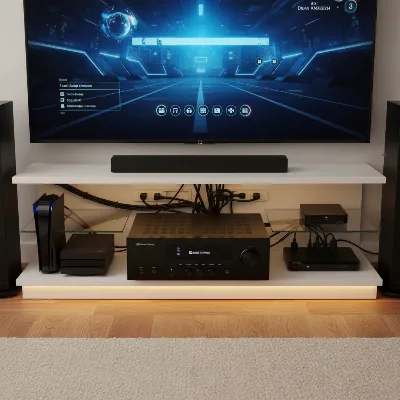 An AV receiver acting as the central hub of a home entertainment system with various devices connected
Popular Types of AV Receivers on the Market
AV receivers come in various configurations, primarily differentiated by their number of channels and supported features. Understanding these types is crucial for selecting a model that aligns with your specific needs and room size.
The most common way to categorize AV receivers is by their channel count, indicating the number of speakers they can power. A 5.1-channel receiver supports five main speakers (front left/right, center, surround left/right) and one subwoofer. Stepping up, 7.1-channel receivers add two more surround channels, typically rear surrounds, for a more enveloping soundstage. For truly immersive, three-dimensional audio, Dolby Atmos and DTS:X capable receivers introduce “height” channels, often seen in configurations like 5.1.2 or 7.1.2 (where the last digit indicates height speakers), creating sound that appears to come from above.
Beyond channel count, receivers can be categorized by their feature sets. Basic models focus on core audio/video switching and amplification. More advanced AV receivers, like the Denon AVR-X2800H, often include network connectivity (Wi-Fi, Ethernet) for music streaming services, multi-room audio (e.g., HEOS Built-in), and support for the latest video technologies such as 4K and 8K passthrough, HDR (HDR10+, Dolby Vision), and advanced gaming features like VRR (Variable Refresh Rate) and ALLM (Auto Low Latency Mode). High-end receivers may also offer superior DACs (Digital-to-Analog Converters) and more powerful, cleaner amplification for discerning audiophiles.
Key Factors to Consider When Buying an AV Receiver
Choosing the right AV receiver involves balancing various technical specifications and desired features with your budget and specific home theater environment.
Power Output
|
Our Picks for the Best AV Receiver in 2026
As an Amazon Associate I earn from qualifying purchases.
|
||
| Num | Product | Action |
|---|---|---|
| 1 | Sony STRDH190 2-ch Home Stereo Receiver with Phono Inputs & Bluetooth Black |

|
| 2 | Denon AVR-X1700H 7.2 Channel AV Receiver - 80W/Channel, Advanced 8K HDMI Video w/eARC, Dolby Atmos, DTS:X, Built-in HEOS, Amazon Alexa Voice Control |
|
| 3 | Sony STR-AN1000 7.2 CH Surround Sound Home Theater 8K A/V Receiver: Dolby Atmos, DTS:X, Digital Cinema Auto Calibration IX, Bluetooth, WiFi, Google Chromecast, Spotify connect, Apple AirPlay, HDMI 2.1 |
|
| 4 | Denon AVR-S570BT AV Receiver 5.2 Channel 8K Ultra HD Audio & Video, Stereo Receivers, Denon AVR Wireless Streaming Bluetooth, (4) 8K HDMI Inputs, eARC, HD Setup Assistant |
|
| 5 | Onkyo TX-RZ30 9.2-Channel AV Receiver - 100 Watts Per Channel, Dirac Live Out of Box, Works with Sonos Certified, THX Certified and More |
|
| 6 | Sony STRDH590 5.2 Channel Surround Sound Home Theater Receiver: 4K HDR AV Receiver with Bluetooth,Black |
|
| 7 | Sony STRDH590 5.2 Multi-Channel 4k HDR AV Receiver with Bluetooth (Renewed) Bundle with 3 YR CPS Enhanced Protection Pack |
|
| 8 | Pyle 5.2 Channel Hi-Fi Home Theater Receiver - 1000W MAX Wireless BT Surround Sound Stereo Amplifier System with 4k Ultra HD Support, MP3/USB/DAC, Ideal for Immersive Home Audio Experience |
|
| 9 | Denon AVR-X1800H 7.2 Channel AV Stereo Receiver - 80W/Channel, Wireless Streaming via Built-in HEOS, WiFi, & Bluetooth, Supports Dolby Vision, HDR10+, Dynamic HDR, & Home Automation Systems |
|
| 10 | YAMAHA RX-V385 5.1-Channel 4K Ultra HD AV Receiver with Bluetooth |
|
The power output, typically measured in watts per channel (WPC), indicates how loud and clearly an AV receiver can drive your speakers. When evaluating power, it’s essential to look at the rating under specific conditions (e.g., 95W at 8 ohms, 20 Hz – 20 kHz, 0.08% THD, with 2 channels driven). A higher wattage generally means the receiver can handle more demanding speakers and fill larger rooms with sound without distortion. Matching the receiver’s power output to your speakers’ impedance and sensitivity ratings is crucial for optimal performance and to prevent damage. Undersized receivers can struggle, leading to clipped audio, while overly powerful ones might not be fully utilized.
Number of Channels
As discussed, the number of channels (e.g., 5.1, 7.1, 5.1.2) directly impacts the spatial realism of your surround sound system. For a basic home theater, 5.1 channels might suffice. However, for a truly immersive experience, especially with modern movie soundtracks and gaming, a 7.1 or 5.1.2 (for Dolby Atmos/DTS:X height effects) setup is often preferred. Consider your room size, the number of speakers you plan to install now, and any future expansion possibilities. Some receivers offer assignable channels, allowing you to re-purpose unused surround channels to power a second stereo zone or additional height speakers.
Connectivity Options
Modern AV receivers serve as the central hub for all your audio-visual devices, making a variety of input and output connections essential. HDMI is paramount, especially HDMI 2.1 ports for 8K video, 4K/120Hz gaming, and eARC (Enhanced Audio Return Channel) for high-resolution audio from your TV. Look for enough HDMI inputs to accommodate all your sources (Blu-ray player, gaming console, streaming devices, cable box) and at least one HDMI output for your display. Other important connections include optical and coaxial digital inputs for audio, RCA analog inputs for older components (like a turntable), and USB ports for local media playback. Wireless connectivity such as Wi-Fi, Bluetooth, and Apple AirPlay 2 are vital for seamless music streaming and integration with smart home ecosystems.
Essential Features
Beyond basic amplification and switching, several features significantly enhance the AV receiver experience. Support for immersive audio formats like Dolby Atmos and DTS:X is crucial for 3D sound. HDR (High Dynamic Range) compatibility (HDR10, HDR10+, Dolby Vision, HLG) ensures vibrant, lifelike visuals. Room correction software, such as Audyssey MultEQ XT (found in Denon receivers) or Dirac Live, automatically calibrates your speakers to your specific room acoustics for optimized sound. Built-in streaming platforms (e.g., HEOS, Spotify Connect) offer direct access to music services. Additional convenient features include voice assistant compatibility (Alexa, Google Assistant), multi-zone audio capabilities, and a user-friendly setup assistant.
 Icons representing key AV receiver features like Dolby Atmos, 8K video, and Wi-Fi streaming
Brand Reputation
The reputation of the brand often reflects the quality, reliability, and innovation of an AV receiver. Established manufacturers like Denon, Marantz, Yamaha, Sony, and Onkyo have long histories of producing high-performance audio equipment. While specific models may vary, choosing a reputable brand generally ensures good build quality, reliable customer support, and access to the latest technologies. Reading expert reviews and user feedback for specific models can provide valuable insights into a brand’s performance and reliability.
Denon AVR-X2800H: A Detailed Look
The Denon AVR-X2800H emerges as a standout 7.2-channel AV receiver, blending impressive performance with a robust feature set tailored for the modern home theater. It delivers 95 watts per channel (8 ohms, 20 Hz – 20 kHz, 0.08% THD, 2 channels driven), providing ample power for clear, dynamic audio across a wide range of speakers. This receiver is highly acclaimed for its ability to produce an immersive 3D audio experience, thanks to full support for Dolby Atmos and DTS:X, enhancing both movie soundtracks and gaming audio with precise sound placement.
Its video capabilities are equally future-proof, featuring three dedicated HDMI 2.1 inputs that support 8K/60Hz and 4K/120Hz pass-through, alongside HDCP 2.3 compatibility. This ensures stunning picture quality with support for advanced HDR formats including HDR10+, Dolby Vision, Dynamic HDR, and HLG, making it ideal for the latest TVs and gaming consoles. The AVR-X2800H also integrates Denon’s HEOS Built-in technology, enabling seamless multi-room music streaming from popular services like Spotify, Tidal, and Amazon Music HD, controllable via the HEOS app. Bluetooth and Wi-Fi are standard, with the added convenience of Bluetooth transmission to headphones for private listening.
Setting up the AVR-X2800H is streamlined by the Denon Setup Assistant and Audyssey MultEQ XT room correction, which automatically calibrate the sound to your specific listening environment. Reviewers consistently praise its engaging sound, refined treble, and overall balanced performance for both two-channel music playback and complex surround soundscapes. While its design maintains a traditional Denon aesthetic, its internal components and performance capabilities firmly position it as a modern receiver offering exceptional value.
Here’s a brief comparison of the Denon AVR-X2800H with some general AV receiver categories:
| Feature/Model | Entry-Level 5.1 AVR (e.g., Denon S-Series) | Mid-Range 7.2 AVR (Denon AVR-X2800H) | High-End 9+ Channel AVR (e.g., Denon X-Series higher models) |
|---|---|---|---|
| Channels | 5.1 | 7.2 | 9.2 or more (e.g., 7.1.4, 7.2.4) |
| Power Output (WPC) | 70-80W | 95W | 100W+ |
| 8K/4K/120Hz HDMI | Limited (1-2 ports) | 3 x HDMI 2.1 (8K/4K/120Hz) | More (4-6+ ports) |
| Immersive Audio | Basic Dolby Atmos/DTS:X Virtualization | Full Dolby Atmos/DTS:X (5.1.2) | Full Dolby Atmos/DTS:X (7.1.4, 7.2.4) |
| Room Correction | Audyssey MultEQ | Audyssey Mult |
Frequently Asked Questions
What is the Denon AVR-X2800H's power output per channel?
The Denon AVR-X2800H delivers 95 watts per channel when driving 2 channels at 8 ohms, 20 Hz - 20 kHz, with 0.08% THD. This provides ample power for clear, dynamic audio across a wide range of speakers in a home theater setup.
Does the Denon AVR-X2800H support immersive audio formats?
Yes, the Denon AVR-X2800H fully supports immersive audio formats like Dolby Atmos and DTS:X. This capability enhances both movie soundtracks and gaming audio by providing precise, three-dimensional sound placement.
What video capabilities does the Denon AVR-X2800H offer?
The Denon AVR-X2800H features three dedicated HDMI 2.1 inputs that support 8K/60Hz and 4K/120Hz pass-through, along with HDCP 2.3 compatibility. It also supports advanced HDR formats including HDR10+, Dolby Vision, Dynamic HDR, and HLG for stunning picture quality.
How does the Denon AVR-X2800H handle multi-room audio?
The Denon AVR-X2800H integrates Denon's HEOS Built-in technology, enabling seamless multi-room music streaming from popular services like Spotify, Tidal, and Amazon Music HD. This feature is controllable via the HEOS app, offering flexible audio distribution throughout your home.
What room correction technology is included with the Denon AVR-X2800H?
The Denon AVR-X2800H includes Audyssey MultEQ XT room correction software. This technology automatically calibrates your speakers to your specific listening environment, optimizing sound performance for your room's acoustics.

I bought this Denon receiver mainly for the 4K/120Hz support for my new gaming setup. While the video quality is fantastic, I found the initial network setup a bit finicky to get working with my specific router. It eventually connected, but it took more troubleshooting than I expected. Once it’s running, it’s great, but that first hurdle was annoying.
The Denon AVR-X2800H is exactly what I needed to tie my whole system together. Having all my gaming consoles and Blu-ray player routed through one central hub makes everything so much cleaner and easier to manage. The 95 watts per channel provides plenty of power for my speakers, delivering crisp and clear audio every time. Highly recommend for anyone serious about their home theater.
I finally upgraded my old receiver to the Denon AVR-X2800H and the difference is night and day. The Dolby Atmos support really brings movies to life, making it feel like sounds are coming from everywhere. Setup was surprisingly straightforward, even for someone who isn’t a total tech wizard. My living room now feels like a proper cinema.
This 7.2-channel receiver is a solid performer for the price. The 8K/60Hz pass-through is a great future-proofing feature, even though I don’t have an 8K TV yet. My only minor gripe is that the remote feels a bit cluttered with too many small buttons. Otherwise, the sound quality and overall performance are excellent.