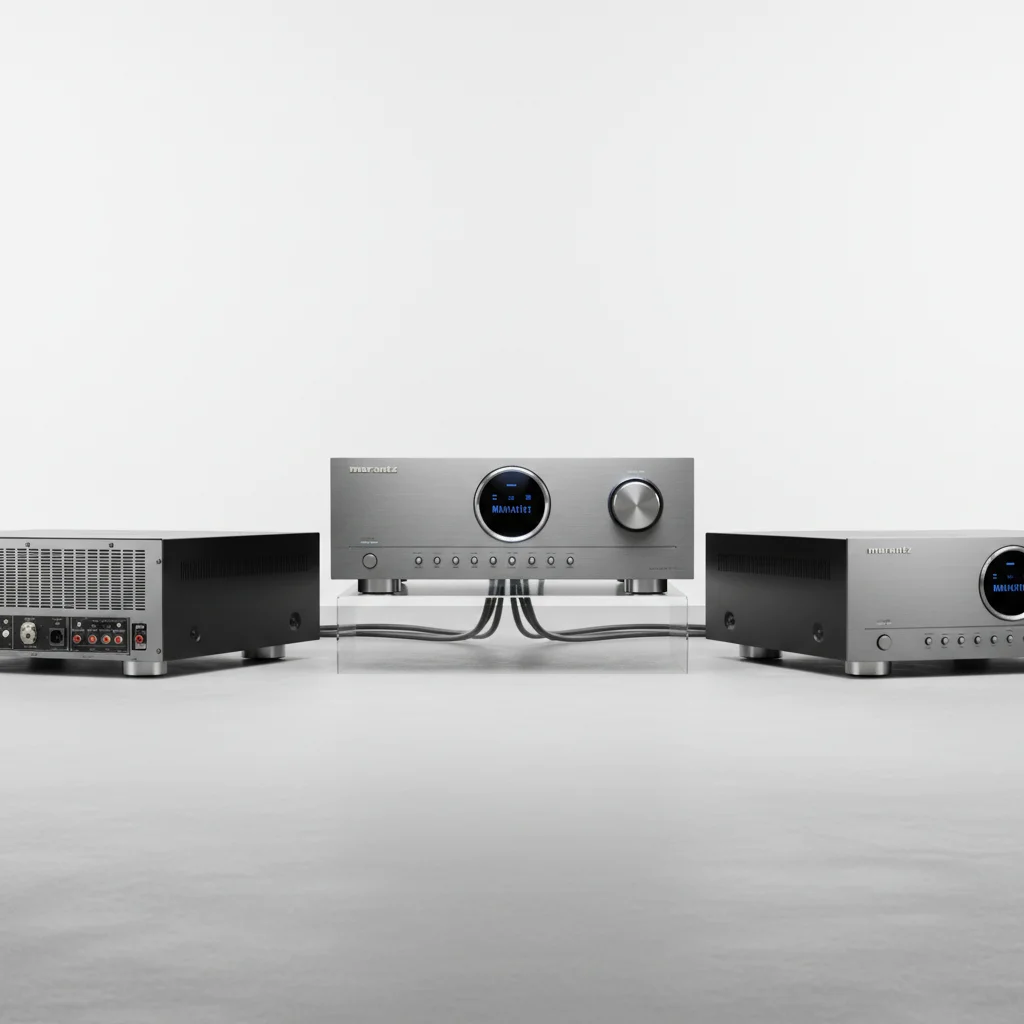
The Marantz SR7015 is the best Marantz AV receiver for DTS:X, offering a robust feature set and exceptional audio processing for immersive soundscapes. DTS:X provides a multi-dimensional audio experience, placing sound objects precisely in a 3D space, enhancing movies, music, and games. Marantz receivers are known for their warm, detailed sound signature, making them an excellent choice for audiophiles seeking to leverage DTS:X technology. This guide explores key Marantz models, helping you select the ideal receiver for your DTS:X home theater.
Quick comparison
| Model | Channels | Power Output (8 ohms) | HDMI 2.1 Ports | Key Feature |
|---|---|---|---|---|
| Marantz SR7015 | 9.2 (11.2 processing) | 125W per channel | 1 in / 2 out | Audyssey MultEQ XT32 |
| Marantz SR6015 | 9.2 | 110W per channel | 1 in / 2 out | Enhanced IMAX Enhanced |
| Marantz Cinema 50 | 9.4 (11.4 processing) | 110W per channel | 6 in / 2 out | Dirac Live upgradable |
What DTS:X needs from an AV Receiver
DTS:X requires an AV receiver capable of decoding its object-based audio format and driving multiple channels, including height speakers. A receiver must support at least a 5.1.2 configuration, meaning five traditional surround channels, one subwoofer, and two height channels. For a more immersive experience, 7.1.2 or 7.1.4 setups are recommended, requiring 9 or 11 amplifier channels, respectively. The receiver’s processing power is crucial for accurately rendering the dynamic, object-oriented soundfield of DTS:X. HDMI 2.0b or newer ports are necessary for passing DTS:X audio from source devices. Look for receivers with robust room correction software, such as Audyssey MultEQ XT32 or Dirac Live, to optimize DTS:X performance for your specific listening environment. Adequate power output per channel ensures dynamic range and clarity, especially during intense action sequences. Network connectivity is also important for firmware updates that may enhance DTS:X decoding or add new features.
Detailed reviews
Marantz SR7015
The Marantz SR7015 stands out as a top-tier choice for DTS:X, offering 9.2 channels of amplification with 125 watts per channel (8 ohms, 20Hz-20kHz, 0.08% THD, 2-ch driven). It supports 11.2 channel processing, allowing for a 7.2.4 DTS:X setup with an external 2-channel amplifier. This receiver features one dedicated HDMI 2.1 input for 8K/60Hz and 4K/120Hz pass-through, alongside six HDMI 2.0b inputs. Audyssey MultEQ XT32 room correction with Sub EQ HT ensures precise calibration for optimal DTS:X sound. The SR7015 also includes IMAX Enhanced certification, further enhancing its cinematic capabilities. Its robust power supply and high-quality DACs deliver a detailed and dynamic audio presentation, making every DTS:X soundtrack come alive with clarity and impact. The unit’s build quality is excellent, reflecting Marantz’s commitment to premium audio.
Marantz SR6015
The Marantz SR6015 provides an excellent balance of performance and value for DTS:X enthusiasts. It features 9.2 channels of amplification, delivering 110 watts per channel (8 ohms, 20Hz-20kHz, 0.08% THD, 2-ch driven). This allows for a native 5.1.4 or 7.1.2 DTS:X configuration. Like the SR7015, it includes one HDMI 2.1 input for next-generation video sources and supports 8K/60Hz and 4K/120Hz pass-through. Audyssey MultEQ XT room correction optimizes sound for your listening space, ensuring accurate DTS:X object placement. The SR6015 is also IMAX Enhanced certified, providing a premium audio and visual experience with compatible content. Its sound signature is classic Marantz, offering a warm, musical presentation that complements the immersive nature of DTS:X. This model is a strong contender for those seeking high-quality DTS:X without the absolute top-tier price.
Marantz Cinema 50
The Marantz Cinema 50 represents a modern approach to home theater, offering 9.4 channels of amplification with 110 watts per channel (8 ohms, 20Hz-20kHz, 0.08% THD, 2-ch driven). It supports 11.4 channel processing, enabling advanced DTS:X setups like 7.1.4 with an external amplifier. This receiver boasts six HDMI 2.1 inputs, all supporting 8K/60Hz and 4K/120Hz pass-through, making it highly future-proof. While it comes with Audyssey MultEQ XT32, it also offers an optional upgrade to Dirac Live room correction, providing even more precise acoustic optimization. The Cinema 50 features a sleek, contemporary design and a new high-resolution graphical user interface. Its powerful processing and flexible configuration options make it ideal for dedicated home theater rooms where DTS:X immersion is a priority. The sound quality is refined, delivering clear dialogue and impactful effects.
Routine fit
Integrating a Marantz AV receiver for DTS:X into your routine enhances daily entertainment. For movie nights, the immersive soundfield of DTS:X, processed by a Marantz receiver, changes your living room into a cinematic experience, making explosions more impactful and dialogue clearer. Gamers will appreciate the precise audio cues that DTS:X provides, offering a competitive edge and deeper immersion in virtual worlds. Music lovers can enjoy upmixed stereo tracks or native DTS:X music content with a wider soundstage and improved spatial accuracy. The user-friendly interfaces and robust connectivity options of Marantz receivers ensure seamless integration with streaming devices, Blu-ray players, and gaming consoles. Whether it’s casual TV viewing or a dedicated listening session, a Marantz DTS:X receiver improves every audio interaction, making your home entertainment more engaging and dynamic.
FAQs
What is DTS:X and how does it differ from Dolby Atmos?
DTS:X is an object-based audio format that allows sound designers to place specific sounds anywhere in a 3D space, including overhead. It differs from Dolby Atmos primarily in its flexibility; DTS:X does not require specific speaker layouts and can adapt to various configurations. Both aim to create an immersive, three-dimensional sound experience, but DTS:X is often praised for its open standard and ability to remap audio to available speakers more dynamically. Marantz receivers handle both formats with excellent fidelity, ensuring you get the best out of your content regardless of the audio codec.
Do I need special speakers for DTS:X?
While you don’t necessarily need
Frequently Asked Questions
What is DTS:X and how does it differ from Dolby Atmos?
DTS:X is an object-based audio format that allows sound designers to place specific sounds anywhere in a 3D space, including overhead. It differs from Dolby Atmos primarily in its flexibility; DTS:X does not require specific speaker layouts and can adapt to various configurations. Both aim to create an immersive, three-dimensional sound experience, but DTS:X is often praised for its open standard and ability to remap audio to available speakers more dynamically. Marantz receivers handle both formats with excellent fidelity, ensuring you get the best out of your content regardless of the audio codec.
Do I need special speakers for DTS:X?
No, you do not necessarily need special speakers for DTS:X. Unlike some other immersive audio formats, DTS:X is designed to be flexible with speaker configurations, adapting to your existing setup. However, to fully experience the overhead effects, you will need at least two height speakers, which can be ceiling-mounted, up-firing, or in-wall speakers.
What minimum speaker configuration is required for DTS:X?
The minimum speaker configuration required for DTS:X is a 5.1.2 setup. This includes five traditional surround channels (front left, center, front right, surround left, surround right), one subwoofer, and two height channels. For a more immersive experience, 7.1.2 or 7.1.4 setups are recommended, requiring 9 or 11 amplifier channels respectively.
Which Marantz AV receiver offers the most HDMI 2.1 inputs?
The Marantz Cinema 50 offers the most HDMI 2.1 inputs among the models discussed, featuring six HDMI 2.1 inputs. All of these inputs support 8K/60Hz and 4K/120Hz pass-through, making it highly future-proof for next-generation video sources. The SR7015 and SR6015 each include one dedicated HDMI 2.1 input.
What room correction software do Marantz DTS:X receivers use?
Marantz DTS:X receivers primarily use Audyssey room correction software. The Marantz SR7015 and Cinema 50 feature Audyssey MultEQ XT32, while the SR6015 uses Audyssey MultEQ XT. The Marantz Cinema 50 also offers an optional upgrade to Dirac Live room correction, providing even more precise acoustic optimization for your listening environment.

Upgrading to a Marantz receiver for DTS:X was a game-changer for my music listening. I went with the SR7015, and the clarity and depth it brings to my favorite tracks are amazing. It’s not just for movies; the immersive soundscapes make every song feel like a live performance. Definitely worth the investment if you appreciate high-quality audio.
I finally pulled the trigger on the Marantz SR7015 after reading up on it, and wow, what a difference! The DTS:X sound is absolutely incredible, especially for movies. My old receiver just couldn’t handle the multi-dimensional audio like this one does. Setup was pretty straightforward, and the Audyssey MultEQ XT32 really helped dial in the sound for my room. Highly recommend for anyone serious about their home theater.
I’ve been a Marantz fan for years, and the SR6015 doesn’t disappoint. The warm, detailed sound signature is exactly what I expect from them. The IMAX Enhanced feature is a nice touch, and it really shines with compatible content. My only minor gripe is that I wish it had more than one HDMI 2.1 input, but for my current setup, it’s not a dealbreaker. Still a fantastic receiver for the price.
I picked up the Marantz Cinema 50, mainly for the Dirac Live upgradable option, which I’m excited to try out. The 110W per channel is decent, but I was hoping for a bit more punch for my larger speakers. It’s a solid receiver, but I feel like it’s a bit underpowered compared to some other options in its class. Still, the sound quality is good, and the DTS:X processing is top-notch.