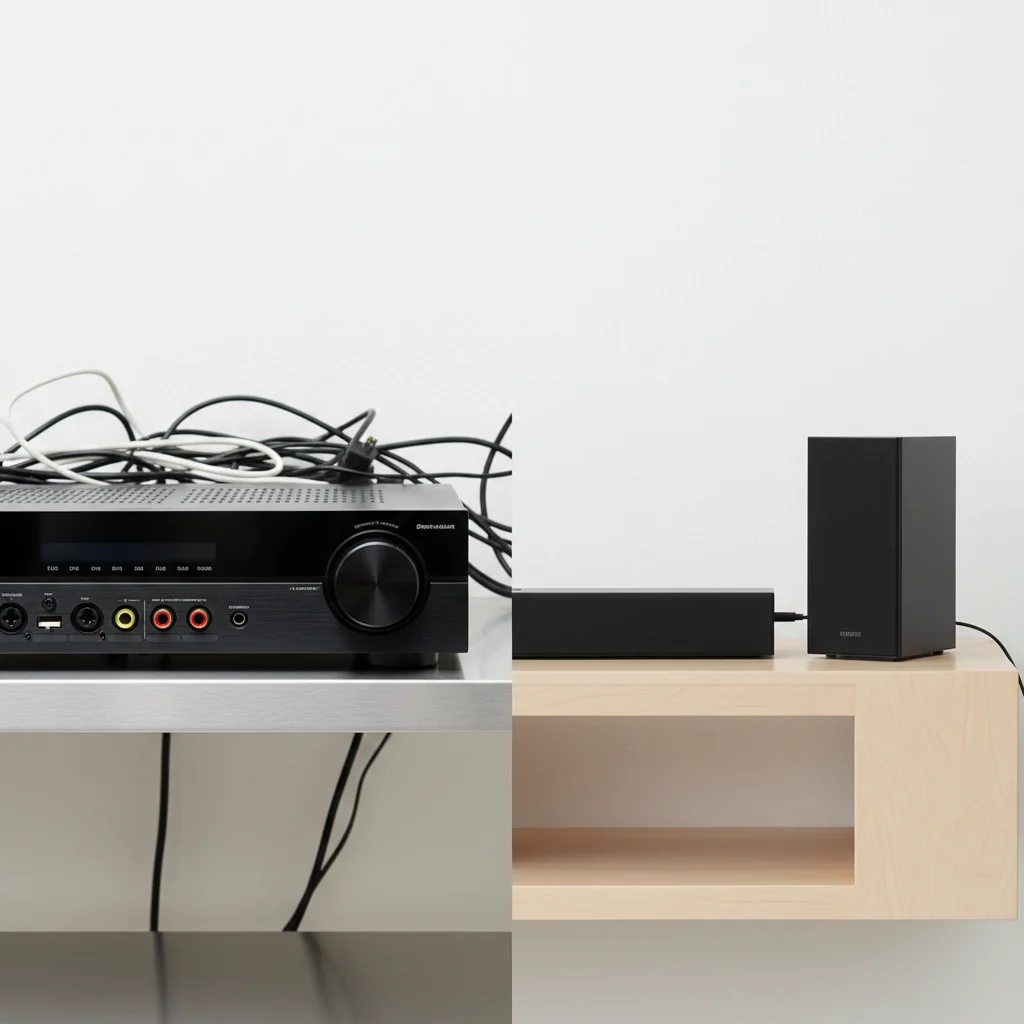
Deciding between an AV receiver and a soundbar for your home audio setup can be challenging, but for superior sound quality and future expandability, an AV receiver is generally the better choice. While soundbars offer convenience and a compact form factor, AV receivers provide a more immersive, customizable, and powerful audio experience, especially for dedicated home theater enthusiasts.
Understanding AV Receivers for Home Audio
An AV receiver acts as the central hub for your home entertainment system, managing all audio and video signals. It connects to multiple sources like Blu-ray players, gaming consoles, and streaming devices, then processes and amplifies the audio to send it to individual speakers. This allows for true surround sound configurations, from 5.1 to 7.2.4 channels and beyond, creating a truly cinematic experience. Receivers also offer advanced features like room correction software, which optimizes sound based on your room’s acoustics, and extensive connectivity options, including multiple HDMI inputs, optical, coaxial, and even phono inputs for turntables.
The power and flexibility of an AV receiver mean you can choose specific speakers for each channel, tailoring the sound profile to your preferences. This modularity also allows for easy upgrades; you can replace individual speakers or add more as your needs evolve, without having to overhaul your entire system. Many modern AV receivers also support advanced audio formats like Dolby Atmos and DTS:X, providing a three-dimensional soundscape that truly envelops the listener.
The Appeal of Soundbars for Simplicity
Soundbars, on the other hand, are designed for simplicity and space-saving. They integrate multiple speakers and amplifiers into a single, sleek unit, making them easy to set up and less obtrusive than a full speaker system. They are a significant upgrade over built-in TV speakers, offering clearer dialogue and a more dynamic sound. Many soundbars also come with wireless subwoofers, adding a noticeable boost to bass frequencies, and some even offer virtual surround sound or optional satellite speakers for a more expansive soundstage.
For those with limited space or a desire for a minimalist setup, a soundbar is an excellent solution. They typically connect to your TV with a single HDMI ARC/eARC cable, simplifying cable management. While they may not offer the same level of audio fidelity or customization as an AV receiver, their convenience and improved sound quality over TV speakers make them a popular choice for casual listeners and smaller living spaces.
Key Differences in Performance and Features
|
Our Picks for the Best AV Receiver in 2026
As an Amazon Associate I earn from qualifying purchases.
|
||
| Num | Product | Action |
|---|---|---|
| 1 | Pyle 5.2 Channel Hi-Fi Home Theater Receiver - 1000W MAX Wireless BT Surround Sound Stereo Amplifier System with 4k Ultra HD Support, MP3/USB/DAC, Ideal for Immersive Home Audio Experience |

|
| 2 | Sony STRDH190 2-ch Home Stereo Receiver with Phono Inputs & Bluetooth Black |
|
| 3 | Sony STRDH590 5.2 Multi-Channel 4k HDR AV Receiver with Bluetooth (Renewed) Bundle with 3 YR CPS Enhanced Protection Pack |
|
| 4 | Denon AVR-X1800H 7.2 Channel AV Stereo Receiver - 80W/Channel, Wireless Streaming via Built-in HEOS, WiFi, & Bluetooth, Supports Dolby Vision, HDR10+, Dynamic HDR, & Home Automation Systems |
|
| 5 | Denon AVR-S570BT AV Receiver 5.2 Channel 8K Ultra HD Audio & Video, Stereo Receivers, Denon AVR Wireless Streaming Bluetooth, (4) 8K HDMI Inputs, eARC, HD Setup Assistant |
|
| 6 | Sony STR-AN1000 7.2 CH Surround Sound Home Theater 8K A/V Receiver: Dolby Atmos, DTS:X, Digital Cinema Auto Calibration IX, Bluetooth, WiFi, Google Chromecast, Spotify connect, Apple AirPlay, HDMI 2.1 |
|
| 7 | Sony STRDH590 5.2 Channel Surround Sound Home Theater Receiver: 4K HDR AV Receiver with Bluetooth,Black |
|
| 8 | YAMAHA RX-V385 5.1-Channel 4K Ultra HD AV Receiver with Bluetooth |
|
| 9 | Denon AVR-X1700H 7.2 Channel AV Receiver - 80W/Channel, Advanced 8K HDMI Video w/eARC, Dolby Atmos, DTS:X, Built-in HEOS, Amazon Alexa Voice Control |
|
| 10 | Onkyo TX-RZ30 9.2-Channel AV Receiver - 100 Watts Per Channel, Dirac Live Out of Box, Works with Sonos Certified, THX Certified and More |
|
The primary distinction lies in performance and features. AV receivers excel in delivering true, discrete surround sound, allowing for precise sound placement and a more immersive experience. They offer significantly more power output, driving larger, more demanding speakers with ease. This results in a richer, more detailed, and dynamic audio presentation, especially noticeable in complex movie soundtracks and high-fidelity music. Receivers often include advanced video processing capabilities, ensuring optimal picture quality alongside superior sound.
Soundbars, while convenient, often rely on digital signal processing to simulate surround sound, which can’t fully replicate the effect of dedicated physical speakers. Their integrated design means less power per channel and limited upgradeability. While some high-end soundbars offer impressive performance, they generally cannot match the raw power, detailed sound reproduction, and extensive connectivity of a mid-range to high-end AV receiver.
When to Choose an AV Receiver
You should opt for an AV receiver if:
- You prioritize the absolute best sound quality and a true surround sound experience.
- You plan to build a dedicated home theater or a high-fidelity music listening room.
- You want the flexibility to choose and upgrade individual speakers.
- You have multiple audio and video sources that need to be connected and managed.
- You desire advanced features like room correction, multi-zone audio, and extensive connectivity.
When to Choose a Soundbar
A soundbar is the better choice if:
- Space is a major constraint, and you prefer a minimalist setup.
- Simplicity and ease of installation are your top priorities.
- You primarily want a significant upgrade over your TV’s built-in speakers for casual viewing.
- Your budget is more limited, and you’re looking for a cost-effective audio solution.
- You don’t require true surround sound or extensive customization options.
Conclusion
The choice between an AV receiver and a soundbar depends on your priorities, budget, and listening environment. For the most immersive, powerful, and customizable home audio experience, an AV receiver with a dedicated speaker system is the undisputed champion. However, for those seeking a simple, space-saving, and significant upgrade over TV speakers, a soundbar offers excellent value and convenience. Consider your long-term goals for your home entertainment system before making your decision.
