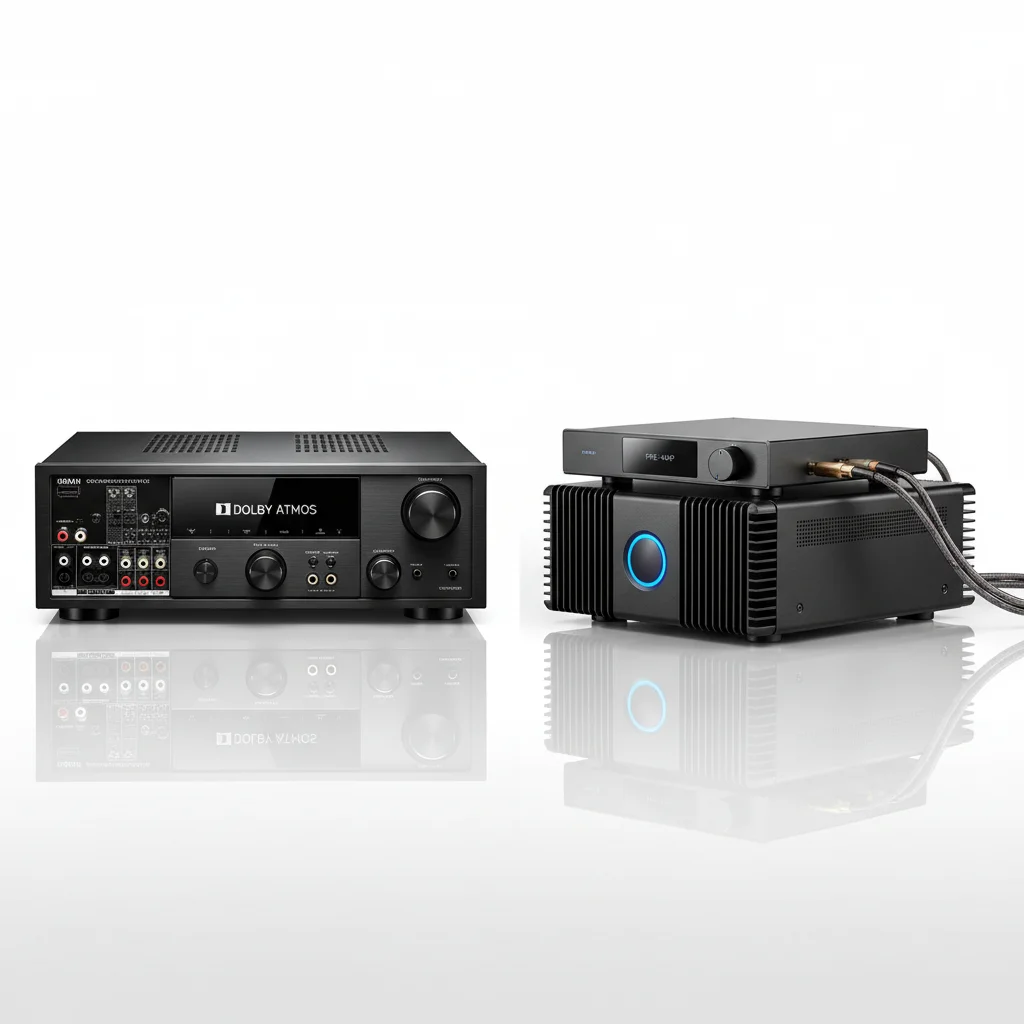
Choosing between an AV receiver and a separate preamp and power amp setup depends on your specific audio and home theater needs, budget, and desired flexibility. For most home theater enthusiasts seeking a balance of convenience, features, and performance, a modern AV receiver offers a compelling all-in-one solution. However, for audiophiles prioritizing ultimate sound quality, upgradeability, and granular control over each component, a dedicated preamp and power amp combination often provides a superior experience, albeit at a higher cost and with increased complexity.
Understanding the All-in-One AV Receiver
An AV receiver integrates multiple components into a single chassis: a preamplifier, a power amplifier, a radio tuner, and often a video switcher and digital-to-analog converter (DAC). This consolidation makes AV receivers incredibly convenient and cost-effective for setting up a home theater system. They typically support a wide array of audio and video formats, including surround sound codecs like Dolby Atmos and DTS:X, and offer numerous HDMI inputs for connecting various sources like Blu-ray players, gaming consoles, and streaming devices. Modern AV receivers also include network connectivity for streaming music services and multi-room audio capabilities.
The primary advantage of an AV receiver is its simplicity. A single unit handles all signal processing, amplification, and switching, reducing cable clutter and simplifying setup. While some audiophiles argue that the integrated design can lead to compromises in sound quality compared to separates, advancements in AV receiver technology have significantly narrowed this gap, especially in mid-to-high-end models.
Exploring the Dedicated Preamp and Power Amp Setup
A preamp (preamplifier) and power amp (power amplifier) setup separates the signal processing and amplification stages into distinct components. The preamplifier handles source selection, volume control, and often includes a DAC for digital audio conversion. It takes the low-level audio signal from your sources and prepares it for amplification. The power amplifier then takes this pre-amplified signal and boosts it to a level sufficient to drive your loudspeakers.
This separation offers several key benefits. Firstly, it minimizes interference between the sensitive low-level signals handled by the preamp and the high-current amplification handled by the power amp, potentially leading to cleaner, more detailed sound. Secondly, it provides greater flexibility for upgrades. You can upgrade your preamp or power amp independently, allowing for a more gradual and tailored improvement to your system. Thirdly, dedicated power amplifiers often have more robust power supplies and higher current capabilities, which can result in better dynamics, control, and overall performance, especially with demanding loudspeakers.
- Superior sound quality due to component isolation
- Greater flexibility for future upgrades
- Enhanced power delivery and speaker control
- More complex cabling and setup
- Higher overall cost compared to integrated solutions
Key Differences in Performance and Features
|
Our Picks for the Best AV Receiver in 2026
As an Amazon Associate I earn from qualifying purchases.
|
||
| Num | Product | Action |
|---|---|---|
| 1 | Sony STRDH590 5.2 Channel Surround Sound Home Theater Receiver: 4K HDR AV Receiver with Bluetooth,Black |

|
| 2 | Sony STR-AN1000 7.2 CH Surround Sound Home Theater 8K A/V Receiver: Dolby Atmos, DTS:X, Digital Cinema Auto Calibration IX, Bluetooth, WiFi, Google Chromecast, Spotify connect, Apple AirPlay, HDMI 2.1 |
|
| 3 | Denon AVR-X1800H 7.2 Channel AV Stereo Receiver - 80W/Channel, Wireless Streaming via Built-in HEOS, WiFi, & Bluetooth, Supports Dolby Vision, HDR10+, Dynamic HDR, & Home Automation Systems |
|
| 4 | Pyle 5.2 Channel Hi-Fi Home Theater Receiver - 1000W MAX Wireless BT Surround Sound Stereo Amplifier System with 4k Ultra HD Support, MP3/USB/DAC, Ideal for Immersive Home Audio Experience |
|
| 5 | Sony STRDH190 2-ch Home Stereo Receiver with Phono Inputs & Bluetooth Black |
|
| 6 | Onkyo TX-RZ30 9.2-Channel AV Receiver - 100 Watts Per Channel, Dirac Live Out of Box, Works with Sonos Certified, THX Certified and More |
|
| 7 | YAMAHA RX-V385 5.1-Channel 4K Ultra HD AV Receiver with Bluetooth |
|
| 8 | Denon AVR-X1700H 7.2 Channel AV Receiver - 80W/Channel, Advanced 8K HDMI Video w/eARC, Dolby Atmos, DTS:X, Built-in HEOS, Amazon Alexa Voice Control |
|
| 9 | Sony STRDH590 5.2 Multi-Channel 4k HDR AV Receiver with Bluetooth (Renewed) Bundle with 3 YR CPS Enhanced Protection Pack |
|
| 10 | Denon AVR-S570BT AV Receiver 5.2 Channel 8K Ultra HD Audio & Video, Stereo Receivers, Denon AVR Wireless Streaming Bluetooth, (4) 8K HDMI Inputs, eARC, HD Setup Assistant |
|
When comparing an AV receiver to a preamp and power amp setup, performance is a significant differentiator. Dedicated preamps often feature higher-quality DACs and more sophisticated analog circuitry, leading to a more refined and accurate audio reproduction. Similarly, separate power amplifiers typically offer more headroom, better transient response, and a more authoritative grip on speakers, resulting in a more dynamic and impactful soundstage.
Feature-wise, AV receivers often come with a broader range of built-in functionalities, such as multi-channel processing, room correction software (like Audyssey or Dirac Live), and extensive video switching capabilities. While some high-end preamps offer similar features, they are generally more focused on pure audio performance. For home theater applications requiring numerous HDMI inputs and advanced video processing, an AV receiver usually provides a more comprehensive solution out of the box.
Cost and Complexity Considerations
The cost difference between these two approaches can be substantial. A high-quality AV receiver can range from a few hundred to several thousand dollars, offering a complete solution. In contrast, a decent separate preamp and power amp combination will almost always cost significantly more, often starting in the thousands and easily reaching tens of thousands of dollars for high-end components. This higher price reflects the specialized engineering and often higher-grade components used in dedicated audio equipment.
Complexity is another factor. An AV receiver is a single unit with a single remote and a relatively straightforward setup process. A preamp and power amp setup, however, involves multiple components, more interconnect cables, and potentially more intricate configuration. While this offers greater control, it also demands more knowledge and effort during installation and calibration.
