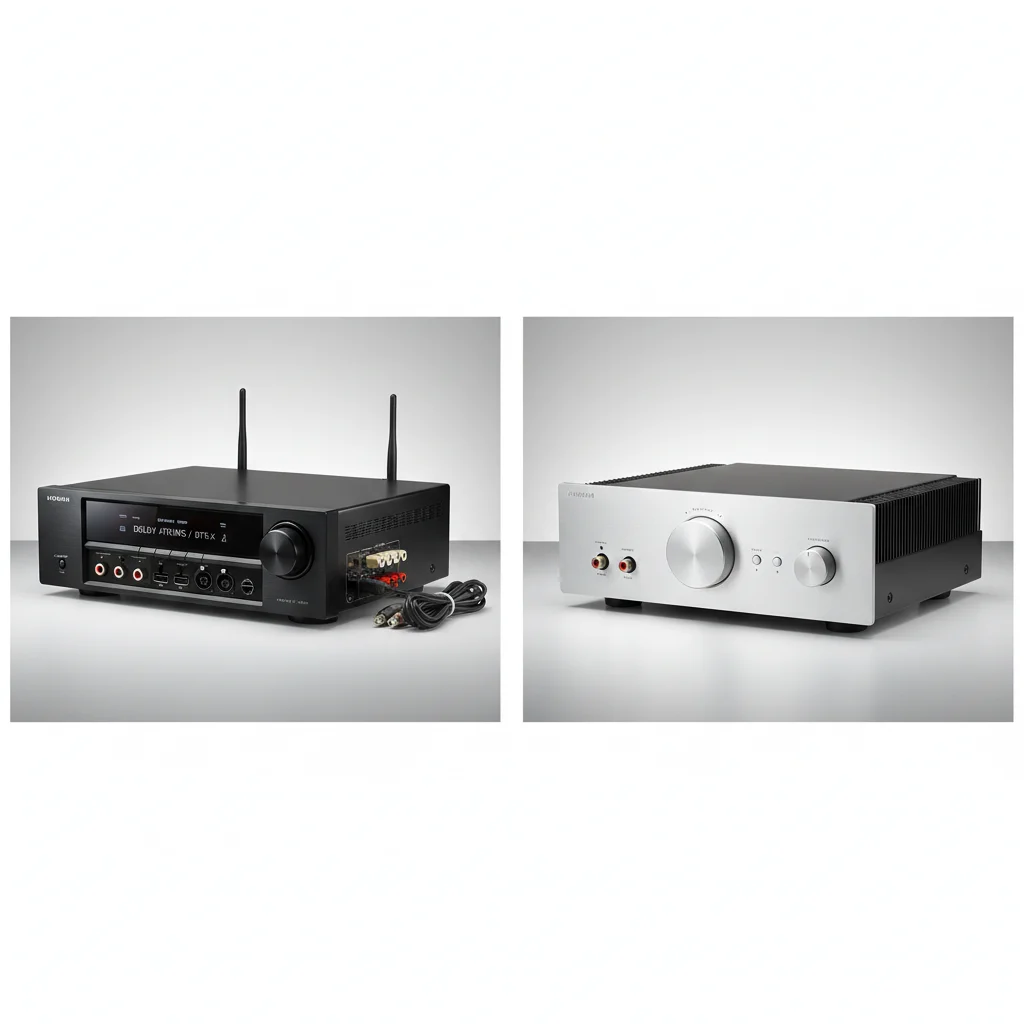
Choosing between an AV receiver and an integrated amplifier depends on your home audio and video needs. An AV receiver is ideal for a home theater setup, offering multi-channel audio, video switching, and surround sound processing for 5.1, 7.1, or 9.2+ channels. In contrast, an integrated amplifier is best suited for a dedicated two-channel stereo music system, prioritizing audio fidelity over video capabilities. This distinction guides whether you need comprehensive home theater control or pristine music playback.
Understanding AV Receivers
AV receivers are the central hub of any home theater system. They combine a preamplifier, a power amplifier, a radio tuner, and video switching capabilities into a single unit. This allows them to manage multiple audio and video sources, such as Blu-ray players, gaming consoles, and streaming devices, routing them to your display and speakers. Modern AV receivers often include advanced features like 4K/8K passthrough, HDR support, object-based audio formats (like Dolby Atmos and DTS:X), and network connectivity for streaming services. Their primary role is to decode surround sound formats and distribute power to multiple speakers, creating an immersive cinematic experience. For browse all diy home articles on this site.
Exploring Integrated Amplifiers
Integrated amplifiers, on the other hand, are designed with a singular focus: high-quality two-channel audio reproduction. They combine a preamplifier and a power amplifier in one chassis, eliminating the need for separate components and simplifying your stereo setup. Integrated amplifiers prioritize clean power delivery and minimal signal interference, making them a favorite among audiophiles who value sonic purity. They typically lack video inputs and surround sound processing, as their purpose is to drive a pair of stereo speakers for music listening. Many integrated amplifiers also include a phono stage for turntables and a headphone amplifier, catering to dedicated music enthusiasts.
Key Differences in Connectivity and Features
|
Our Picks for the Best AV Receiver in 2026
As an Amazon Associate I earn from qualifying purchases.
|
||
| Num | Product | Action |
|---|---|---|
| 1 | YAMAHA RX-V385 5.1-Channel 4K Ultra HD AV Receiver with Bluetooth |

|
| 2 | Sony STRDH590 5.2 Multi-Channel 4k HDR AV Receiver with Bluetooth (Renewed) Bundle with 3 YR CPS Enhanced Protection Pack |
|
| 3 | Denon AVR-S570BT AV Receiver 5.2 Channel 8K Ultra HD Audio & Video, Stereo Receivers, Denon AVR Wireless Streaming Bluetooth, (4) 8K HDMI Inputs, eARC, HD Setup Assistant |
|
| 4 | Pyle 5.2 Channel Hi-Fi Home Theater Receiver - 1000W MAX Wireless BT Surround Sound Stereo Amplifier System with 4k Ultra HD Support, MP3/USB/DAC, Ideal for Immersive Home Audio Experience |
|
| 5 | Sony STR-AN1000 7.2 CH Surround Sound Home Theater 8K A/V Receiver: Dolby Atmos, DTS:X, Digital Cinema Auto Calibration IX, Bluetooth, WiFi, Google Chromecast, Spotify connect, Apple AirPlay, HDMI 2.1 |
|
| 6 | Denon AVR-X1700H 7.2 Channel AV Receiver - 80W/Channel, Advanced 8K HDMI Video w/eARC, Dolby Atmos, DTS:X, Built-in HEOS, Amazon Alexa Voice Control |
|
| 7 | Onkyo TX-RZ30 9.2-Channel AV Receiver - 100 Watts Per Channel, Dirac Live Out of Box, Works with Sonos Certified, THX Certified and More |
|
| 8 | Sony STRDH190 2-ch Home Stereo Receiver with Phono Inputs & Bluetooth Black |
|
| 9 | Denon AVR-X1800H 7.2 Channel AV Stereo Receiver - 80W/Channel, Wireless Streaming via Built-in HEOS, WiFi, & Bluetooth, Supports Dolby Vision, HDR10+, Dynamic HDR, & Home Automation Systems |
|
| 10 | Sony STRDH590 5.2 Channel Surround Sound Home Theater Receiver: 4K HDR AV Receiver with Bluetooth,Black |
|
The most significant differences between AV receivers and integrated amplifiers are in their connectivity options and feature sets. AV receivers boast numerous HDMI inputs and outputs, optical and coaxial digital inputs, and often multiple analog audio inputs. They also include speaker terminals for 5, 7, or more channels, along with subwoofer pre-outs. Features like room correction software, multi-zone audio, and built-in Wi-Fi/Bluetooth are common. Integrated amplifiers, conversely, offer a more streamlined selection of inputs, primarily focusing on analog audio (RCA, XLR) and sometimes a few digital inputs. Their speaker terminals are typically limited to two channels, and advanced video processing is absent.
- AV Receivers: Multi-channel audio, video switching, surround sound decoding, numerous HDMI ports, network features.
- Integrated Amplifiers: Two-channel stereo, high-fidelity audio, fewer inputs, often includes phono stage, no video processing.
- Power Output: AV receivers distribute power across many channels; integrated amplifiers focus power on two channels.
- Purpose: AV receivers for home theater; integrated amplifiers for dedicated music listening.
- Complexity: AV receivers are generally more complex to set up due to numerous connections and settings.
When to Choose an AV Receiver
If your primary goal is to build a home theater system for movies, TV shows, and gaming, an AV receiver is the clear choice. It provides the necessary processing for surround sound, handles all your video sources, and powers multiple speakers for a truly immersive experience. Consider an AV receiver if you plan to have more than two speakers, want to enjoy Dolby Atmos or DTS:X, and need a central hub for all your entertainment devices.This type of device is essential for anyone looking to create a cinematic atmosphere in their living room.
When to Choose an Integrated Amplifier
For those whose main priority is high-quality music playback in a two-channel stereo setup, an integrated amplifier is the superior option. If you primarily listen to vinyl, CDs, or high-resolution audio files and value sonic clarity and detail above all else, an integrated amplifier will deliver a more refined listening experience. It simplifies your audio chain, often resulting in a cleaner signal path and better sound quality for music.This choice is perfect for audiophiles who appreciate the nuances of stereo sound and prefer a minimalist audio system.
Frequently Asked Questions
What is the main difference between an AV receiver and an integrated amplifier?
The main difference is their primary function: an AV receiver is designed for multi-channel home theater audio and video, supporting formats like 5.1 or 7.1 surround sound. An integrated amplifier, however, focuses on high-quality two-channel stereo music reproduction.
When should I choose an AV receiver for my home entertainment system?
You should choose an AV receiver if your primary goal is a home theater system for movies, TV shows, and gaming. It provides surround sound processing, handles multiple video sources, and powers more than two speakers for an immersive cinematic experience.
Why would an audiophile prefer an integrated amplifier over an AV receiver?
Audiophiles often prefer an integrated amplifier for its singular focus on high-quality two-channel audio reproduction. It prioritizes clean power delivery and minimal signal interference, resulting in a more refined listening experience for music, especially for vinyl or high-resolution audio.
Do integrated amplifiers support video inputs like HDMI?
No, integrated amplifiers typically lack video inputs and surround sound processing. Their design focuses on audio fidelity for two-channel stereo systems, meaning they do not include features like HDMI ports or 4K/8K passthrough found in AV receivers.
What advanced features do modern AV receivers offer for home theaters?
Modern AV receivers offer advanced features such as 4K/8K passthrough, HDR support, object-based audio formats like Dolby Atmos and DTS:X, and network connectivity for streaming services. They also include room correction software and multi-zone audio capabilities.

I found the comparison useful, especially regarding video switching. However, I wish there was a bit more detail on specific brands or models for AV receivers that handle 9.2+ channels. It felt a little general in that area. Still, it helped me confirm that an AV receiver is definitely what I need for my expanding system, even if I have to do more research on specific models.
I was really on the fence about upgrading my old setup, but the breakdown of AV receivers for home theater was super helpful. I ended up going with a Denon 7.2 channel receiver, and the difference in my surround sound is night and day. Gaming and movies feel so much more immersive now. Definitely worth the investment for anyone serious about their home cinema.
I’ve always been a two-channel stereo person, so the integrated amplifier section really resonated with me. I appreciate the focus on audio fidelity. My only minor complaint is that some of the integrated amps mentioned were a bit out of my budget, but it still gave me a good idea of what to look for. My music sounds fantastic through my new setup.
This really cleared up the confusion I had between an AV receiver and an integrated amplifier. I mostly use my system for movies and streaming, so knowing that an AV receiver handles multiple audio and video sources was key. My old setup was a mess of cables, and now everything is so much cleaner and easier to manage. Great info!