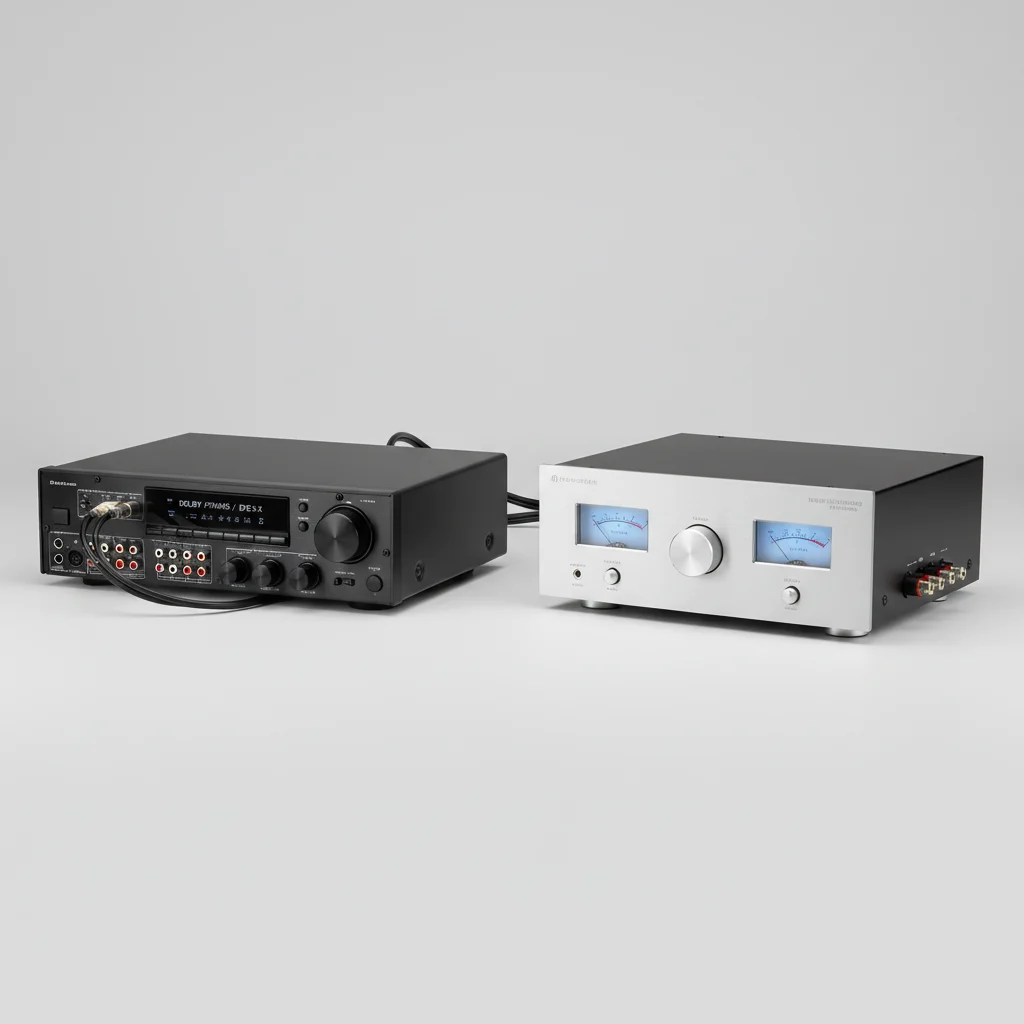
Choosing between an AV receiver and a dedicated amplifier for your home audio setup can significantly impact sound quality. While both devices amplify audio signals, an AV receiver integrates multiple functions like video switching, surround sound processing, and network connectivity, making it a versatile hub for home theater systems. In contrast, a dedicated amplifier focuses solely on amplifying audio signals, often resulting in superior sound fidelity due to fewer compromises in component design and power delivery. For audiophiles prioritizing pure sound quality, a separate amplifier often provides a noticeable improvement.
Understanding AV Receivers and Their Role
An AV receiver is the central component of most home theater systems, handling audio and video signals from various sources like Blu-ray players, streaming devices, and gaming consoles. It decodes surround sound formats, switches video inputs to your TV, and powers your speakers. Modern AV receivers also include network features for music streaming and smart home integration. This multi-functional design, while convenient, can sometimes lead to compromises in the quality of individual components compared to a dedicated amplifier. For expert diy home reviews on this site.
For example, a typical 7.2 channel AV receiver might offer 100 watts per channel, but this power is often shared across multiple channels, and the internal components are designed to balance cost and functionality.
The Case for Dedicated Amplifiers
Dedicated amplifiers, whether stereo or multi-channel power amplifiers, are designed with a singular focus: to amplify audio signals with the utmost precision and power. They typically feature larger power supplies, higher-quality capacitors, and more robust output stages, leading to cleaner power delivery and reduced distortion. This specialized design often translates to a more dynamic, detailed, and accurate sound reproduction, especially at higher volumes or with demanding speakers.
Many audiophiles prefer separating the pre-amplification and power amplification stages, using a dedicated preamplifier for source switching and volume control, and a separate power amplifier for driving speakers. This modular approach allows for greater flexibility and optimization of each component’s performance.
Key Differences in Sound Performance
|
Our Picks for the Best AV Receiver in 2026
As an Amazon Associate I earn from qualifying purchases.
|
||
| Num | Product | Action |
|---|---|---|
| 1 | Denon AVR-S570BT AV Receiver 5.2 Channel 8K Ultra HD Audio & Video, Stereo Receivers, Denon AVR Wireless Streaming Bluetooth, (4) 8K HDMI Inputs, eARC, HD Setup Assistant |

|
| 2 | Sony STRDH190 2-ch Home Stereo Receiver with Phono Inputs & Bluetooth Black |
|
| 3 | Pyle 5.2 Channel Hi-Fi Home Theater Receiver - 1000W MAX Wireless BT Surround Sound Stereo Amplifier System with 4k Ultra HD Support, MP3/USB/DAC, Ideal for Immersive Home Audio Experience |
|
| 4 | Sony STRDH590 5.2 Channel Surround Sound Home Theater Receiver: 4K HDR AV Receiver with Bluetooth,Black |
|
| 5 | YAMAHA RX-V385 5.1-Channel 4K Ultra HD AV Receiver with Bluetooth |
|
| 6 | Onkyo TX-RZ30 9.2-Channel AV Receiver - 100 Watts Per Channel, Dirac Live Out of Box, Works with Sonos Certified, THX Certified and More |
|
| 7 | Denon AVR-X1700H 7.2 Channel AV Receiver - 80W/Channel, Advanced 8K HDMI Video w/eARC, Dolby Atmos, DTS:X, Built-in HEOS, Amazon Alexa Voice Control |
|
| 8 | Denon AVR-X1800H 7.2 Channel AV Stereo Receiver - 80W/Channel, Wireless Streaming via Built-in HEOS, WiFi, & Bluetooth, Supports Dolby Vision, HDR10+, Dynamic HDR, & Home Automation Systems |
|
| 9 | Sony STR-AN1000 7.2 CH Surround Sound Home Theater 8K A/V Receiver: Dolby Atmos, DTS:X, Digital Cinema Auto Calibration IX, Bluetooth, WiFi, Google Chromecast, Spotify connect, Apple AirPlay, HDMI 2.1 |
|
| 10 | Sony STRDH590 5.2 Multi-Channel 4k HDR AV Receiver with Bluetooth (Renewed) Bundle with 3 YR CPS Enhanced Protection Pack |
|
The primary difference in sound performance between an AV receiver and a dedicated amplifier lies in their ability to deliver clean, uncolored power to speakers. Dedicated amplifiers generally excel in:
- Dynamic Range: Better handling of sudden changes in volume, from quiet passages to loud crescendos.
- Clarity and Detail: More precise reproduction of subtle nuances in music and movie soundtracks.
- Soundstage: A more expansive and accurate three-dimensional sound image.
- Bass Control: Tighter, more impactful, and better-defined bass frequencies.
- Power Delivery: More stable and consistent power output, especially into challenging speaker loads.
When to Choose an AV Receiver
An AV receiver is the ideal choice for most home theater enthusiasts who want a single, integrated solution for managing all their audio and video components. It simplifies setup, reduces cable clutter, and provides a comprehensive feature set for surround sound, video switching, and streaming. If your primary goal is a cohesive home theater experience with good quality sound and video, an AV receiver offers excellent value and convenience.
When to Opt for a Dedicated Amplifier
A dedicated amplifier is best suited for audiophiles and serious home theater enthusiasts who prioritize the absolute best sound quality above all else. If you have high-end, power-hungry speakers, or if you simply want to extract every last detail and dynamic nuance from your audio, a separate amplifier or a pre/power amp combination will likely provide a more satisfying listening experience. This option is also excellent for those who enjoy upgrading individual components over time.
Conclusion
The choice between an AV receiver and a dedicated amplifier depends on your priorities. For a versatile, all-in-one home theater hub with good sound, an AV receiver is an excellent choice. However, if uncompromised sound quality, superior power delivery, and the ability to drive demanding speakers are your main concerns, investing in a dedicated amplifier will provide a noticeable and rewarding upgrade to your audio system.
