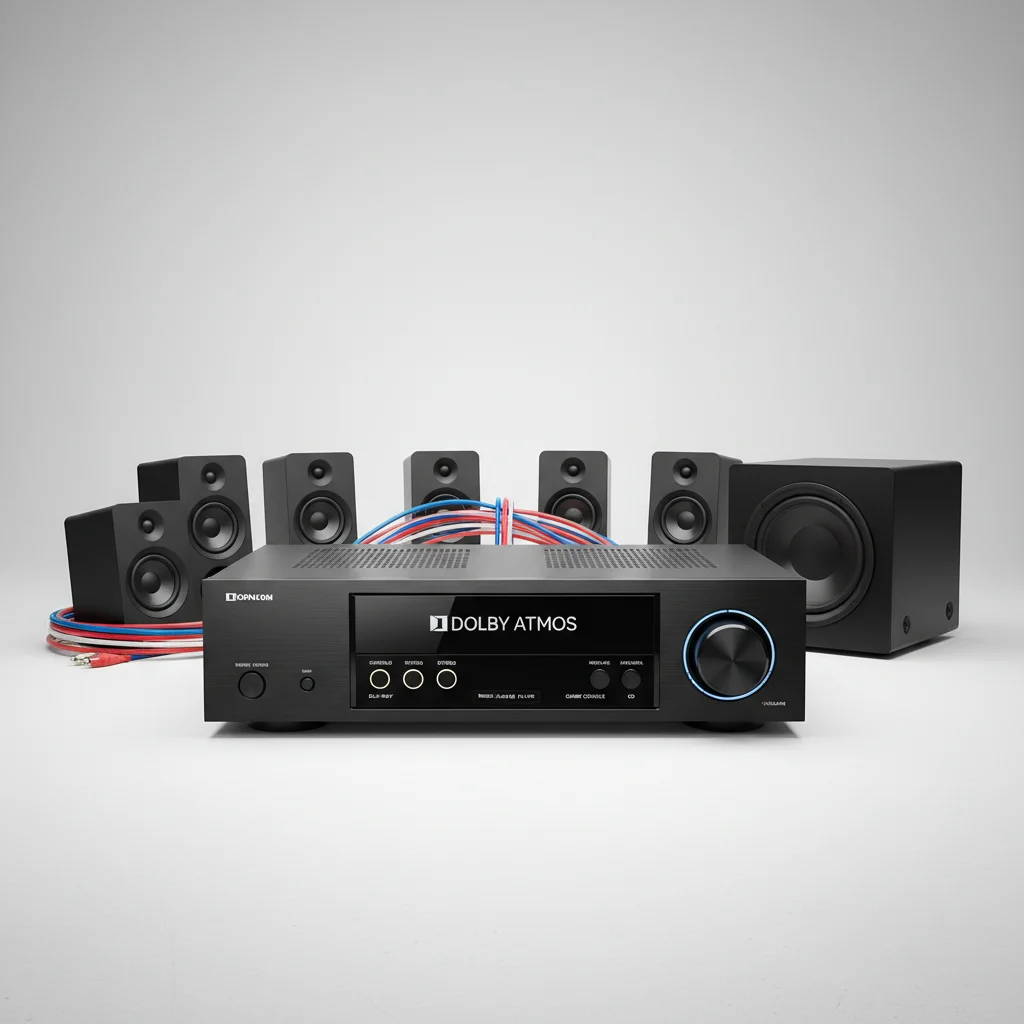
Choosing the best AV receiver surround sound mode for movies depends on your specific audio setup and personal preference, but for most home theater enthusiasts, Dolby Atmos or DTS:X will deliver the most immersive and dynamic experience. These object-based formats provide a three-dimensional soundstage that traditional channel-based modes cannot replicate, placing sounds precisely around and above you.
Understanding Object-Based vs. Channel-Based Audio
Traditional surround sound, like Dolby Digital and DTS, is channel-based. This means audio is mixed to specific speakers (e.g., front left, center, surround right). While effective, it creates a more two-dimensional sound field. Object-based audio, on the other hand, treats individual sounds (like a helicopter flying overhead or a bullet whizzing past) as ‘objects’ that can be placed and moved anywhere in a 3D space, including overhead. This allows for a much more realistic and engaging audio experience.
For optimal object-based audio, you’ll need an AV receiver that supports Dolby Atmos or DTS:X, along with compatible speakers, including height channels. These height channels can be in-ceiling, on-ceiling, or up-firing speakers that bounce sound off the ceiling to create the overhead effect.
Dolby Atmos: The Immersive Standard
Dolby Atmos is widely considered the gold standard for immersive home theater audio. It expands on traditional surround sound by adding height channels, creating a truly three-dimensional soundscape. Movies mixed in Dolby Atmos offer unparalleled realism, with sounds moving seamlessly around and above the viewer. Many modern AV receivers support Dolby Atmos, and a growing number of Blu-ray discs and streaming services offer content in this format.
When setting up Dolby Atmos, ensure your speakers are correctly positioned according to Dolby’s guidelines. This typically involves a 5.1.2, 7.1.2, or even 7.1.4 configuration, where the last number indicates the number of height channels.
DTS:X: A Flexible Alternative
|
Our Picks for the Best AV Receiver in 2026
As an Amazon Associate I earn from qualifying purchases.
|
||
| Num | Product | Action |
|---|---|---|
| 1 | Sony STR-AN1000 7.2 CH Surround Sound Home Theater 8K A/V Receiver: Dolby Atmos, DTS:X, Digital Cinema Auto Calibration IX, Bluetooth, WiFi, Google Chromecast, Spotify connect, Apple AirPlay, HDMI 2.1 |

|
| 2 | YAMAHA RX-V385 5.1-Channel 4K Ultra HD AV Receiver with Bluetooth |
|
| 3 | Denon AVR-S570BT AV Receiver 5.2 Channel 8K Ultra HD Audio & Video, Stereo Receivers, Denon AVR Wireless Streaming Bluetooth, (4) 8K HDMI Inputs, eARC, HD Setup Assistant |
|
| 4 | Pyle 5.2 Channel Hi-Fi Home Theater Receiver - 1000W MAX Wireless BT Surround Sound Stereo Amplifier System with 4k Ultra HD Support, MP3/USB/DAC, Ideal for Immersive Home Audio Experience |
|
| 5 | Onkyo TX-RZ30 9.2-Channel AV Receiver - 100 Watts Per Channel, Dirac Live Out of Box, Works with Sonos Certified, THX Certified and More |
|
| 6 | Denon AVR-X1700H 7.2 Channel AV Receiver - 80W/Channel, Advanced 8K HDMI Video w/eARC, Dolby Atmos, DTS:X, Built-in HEOS, Amazon Alexa Voice Control |
|
| 7 | Denon AVR-X1800H 7.2 Channel AV Stereo Receiver - 80W/Channel, Wireless Streaming via Built-in HEOS, WiFi, & Bluetooth, Supports Dolby Vision, HDR10+, Dynamic HDR, & Home Automation Systems |
|
| 8 | Sony STRDH190 2-ch Home Stereo Receiver with Phono Inputs & Bluetooth Black |
|
| 9 | Sony STRDH590 5.2 Channel Surround Sound Home Theater Receiver: 4K HDR AV Receiver with Bluetooth,Black |
|
| 10 | Sony STRDH590 5.2 Multi-Channel 4k HDR AV Receiver with Bluetooth (Renewed) Bundle with 3 YR CPS Enhanced Protection Pack |
|
DTS:X is another excellent object-based audio format that competes directly with Dolby Atmos. One of its key advantages is its flexibility in speaker placement; unlike Atmos, DTS:X doesn’t strictly require specific height speaker locations, making it potentially easier to integrate into existing home theater setups. It also offers similar immersive qualities, placing sounds precisely in a three-dimensional space.
Many AV receivers that support Dolby Atmos also support DTS:X, offering consumers the best of both worlds. The choice between the two often comes down to the specific movie soundtrack and personal preference, as both deliver a compelling audio experience.
When to Use Other Surround Modes
While object-based formats are ideal, other surround sound modes still have their place. For content not mixed in Dolby Atmos or DTS:X, your AV receiver will often have upmixing technologies like Dolby Surround or DTS Neural:X. These technologies can take traditional channel-based audio and intelligently expand it to utilize your height speakers, creating a more immersive experience even from older content.
- Stereo: Best for pure music listening where a two-channel presentation is desired.
- Dolby Digital/DTS: Standard for older DVDs and some streaming content, offering a solid 5.1 or 7.1 channel experience.
- All-Channel Stereo: Useful for parties or background music, playing stereo audio through all available speakers.
- Direct/Pure Direct: Bypasses all processing for the purest audio signal, ideal for high-fidelity music.
Optimizing Your Surround Sound Experience
Regardless of the mode you choose, proper calibration of your AV receiver and speakers is crucial. Most modern AV receivers come with an automatic calibration system (like Audyssey, YPAO, or MCACC) that uses a microphone to measure your room’s acoustics and adjust speaker levels, distances, and equalization. Running this calibration will significantly improve the overall sound quality and ensure that your chosen surround sound mode performs at its best.
