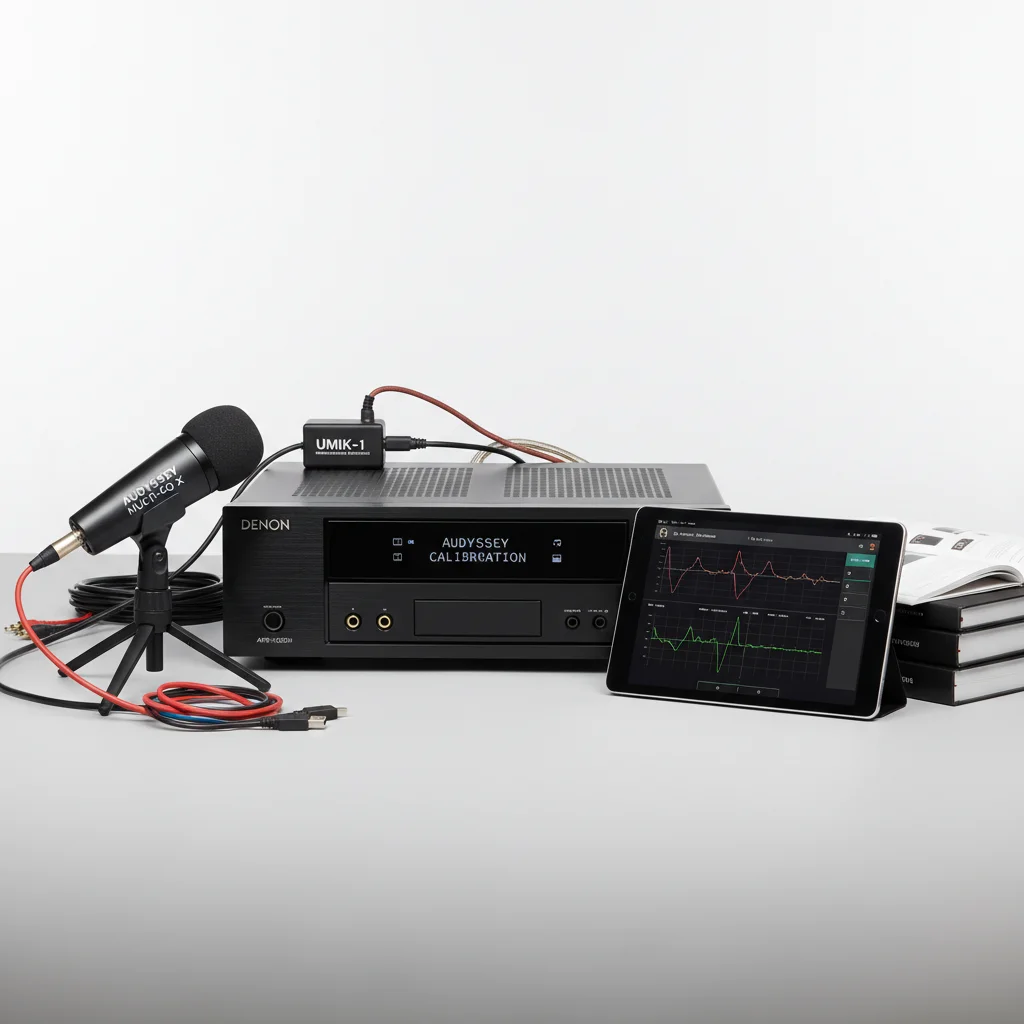
AV receiver room correction significantly improves sound quality by analyzing your room’s acoustics and adjusting audio output to compensate for imperfections. This process can lead to a noticeable enhancement in clarity, bass response, and overall soundstage, making your home theater experience more immersive and accurate. Most modern AV receivers offer some form of room correction, with advanced systems employing sophisticated algorithms to optimize sound for your specific listening environment.
Understanding How Room Correction Works
Room correction systems, such as Audyssey, YPAO, or Dirac Live, use a microphone to measure the acoustic properties of your listening space. The microphone is typically placed at various listening positions, capturing test tones emitted by your speakers. The system then analyzes how these sounds are affected by the room’s dimensions, furniture, and reflective surfaces. Based on this data, the AV receiver applies digital filters and equalization to each speaker and subwoofer, aiming to flatten the frequency response and correct for phase issues. This ensures that the sound you hear is as close as possible to the original recording, minimizing the negative impact of your room’s acoustics.
Benefits of Implementing Room Correction
The primary benefit of AV receiver room correction is a more balanced and accurate sound reproduction. Without it, your room can introduce unwanted resonances, muddy bass, or harsh treble. Room correction addresses these issues, resulting in clearer dialogue, tighter bass, and a more defined soundstage where instruments and effects are precisely placed. It can also help to integrate your subwoofer seamlessly with your main speakers, creating a cohesive and impactful low-frequency experience. For many users, the difference before and after calibration is substantial, making it a crucial step in optimizing a home theater system.
- Improved bass response and clarity
- More accurate dialogue and vocal reproduction
- Enhanced soundstage and imaging
- Better integration between speakers and subwoofer
- Compensation for room acoustic imperfections
Common Room Correction Systems and Their Features
|
Our Picks for the Best AV Receiver in 2026
As an Amazon Associate I earn from qualifying purchases.
|
||
| Num | Product | Action |
|---|---|---|
| 1 | Pyle 5.2 Channel Hi-Fi Home Theater Receiver - 1000W MAX Wireless BT Surround Sound Stereo Amplifier System with 4k Ultra HD Support, MP3/USB/DAC, Ideal for Immersive Home Audio Experience |

|
| 2 | Sony STRDH190 2-ch Home Stereo Receiver with Phono Inputs & Bluetooth Black |
|
| 3 | Denon AVR-S570BT AV Receiver 5.2 Channel 8K Ultra HD Audio & Video, Stereo Receivers, Denon AVR Wireless Streaming Bluetooth, (4) 8K HDMI Inputs, eARC, HD Setup Assistant |
|
| 4 | Denon AVR-X1800H 7.2 Channel AV Stereo Receiver - 80W/Channel, Wireless Streaming via Built-in HEOS, WiFi, & Bluetooth, Supports Dolby Vision, HDR10+, Dynamic HDR, & Home Automation Systems |
|
| 5 | Denon AVR-X1700H 7.2 Channel AV Receiver - 80W/Channel, Advanced 8K HDMI Video w/eARC, Dolby Atmos, DTS:X, Built-in HEOS, Amazon Alexa Voice Control |
|
| 6 | Onkyo TX-RZ30 9.2-Channel AV Receiver - 100 Watts Per Channel, Dirac Live Out of Box, Works with Sonos Certified, THX Certified and More |
|
| 7 | YAMAHA RX-V385 5.1-Channel 4K Ultra HD AV Receiver with Bluetooth |
|
| 8 | Sony STRDH590 5.2 Channel Surround Sound Home Theater Receiver: 4K HDR AV Receiver with Bluetooth,Black |
|
| 9 | Sony STR-AN1000 7.2 CH Surround Sound Home Theater 8K A/V Receiver: Dolby Atmos, DTS:X, Digital Cinema Auto Calibration IX, Bluetooth, WiFi, Google Chromecast, Spotify connect, Apple AirPlay, HDMI 2.1 |
|
| 10 | Sony STRDH590 5.2 Multi-Channel 4k HDR AV Receiver with Bluetooth (Renewed) Bundle with 3 YR CPS Enhanced Protection Pack |
|
Several popular room correction systems are integrated into AV receivers. Audyssey, found in Denon and Marantz receivers, offers various levels of sophistication, from MultEQ XT to the more advanced MultEQ XT32 and Audyssey Sub EQ HT. Yamaha’s YPAO (Yamaha Parametric Room Acoustic Optimizer) is another widely used system, known for its ease of use and effective calibration. Higher-end receivers may feature Dirac Live, which is often considered one of the most precise and powerful room correction solutions available, offering extensive customization options. Each system has its strengths, but all aim to achieve similar goals: optimizing sound for your specific room.
Tips for Optimal Room Correction Results
To get the best results from your AV receiver’s room correction, ensure your speakers are properly placed and wired before running the calibration. Use the provided microphone and follow the instructions carefully, taking measurements from multiple listening positions. Avoid making significant changes to your room’s layout or speaker placement after calibration, as this can negate the benefits. If you move furniture or speakers, it’s advisable to rerun the room correction. Experiment with any advanced settings your system offers, such as target curves or manual EQ adjustments, to fine-tune the sound to your personal preferences.Many users find that a little experimentation after the initial calibration can yield even better results.
When Room Correction Might Not Be Enough
While AV receiver room correction is highly effective, it’s important to understand its limitations. It primarily addresses frequency response and time domain issues caused by the room. It cannot fix fundamental problems like poor speaker placement, mismatched speakers, or severe acoustic anomalies. In rooms with extreme echo or reverberation, additional acoustic treatments like sound panels or bass traps might be necessary to complement the electronic correction. Think of room correction as a powerful fine-tuning tool, but not a substitute for good foundational setup practices.For truly challenging rooms, a combination of both electronic correction and physical acoustic treatment will deliver the most superior audio experience.
