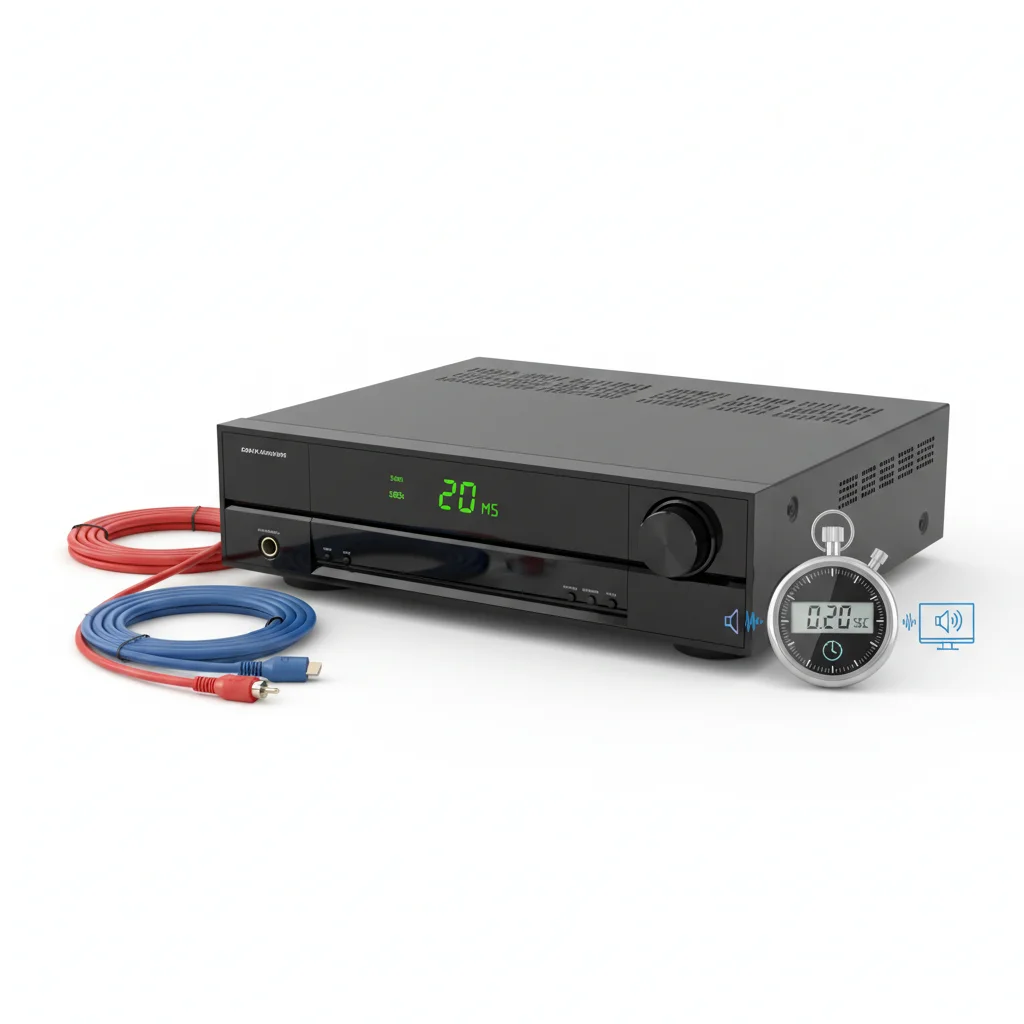
AV receiver latency, often measured in milliseconds (ms), refers to the delay between an audio or video signal entering the receiver and exiting it. For most casual viewing and listening, a latency of up to 50 milliseconds is generally acceptable. However, for critical applications like competitive gaming or professional audio monitoring, anything above 20 milliseconds can be noticeable and detrimental to the user experience.
Understanding Latency in AV Receivers
Latency is an inherent part of any digital signal processing chain. When an audio or video signal passes through an AV receiver, it undergoes various processes such as decoding, upscaling, and room correction, all of which introduce a small delay. While modern receivers are designed to minimize this, it’s impossible to eliminate it entirely. The impact of latency becomes most apparent when there’s a mismatch between audio and video, leading to a noticeable lip-sync issue.
Different components within your home theater setup can contribute to overall latency. Your TV, source devices (like gaming consoles or Blu-ray players), and even the cables themselves can add to the delay. Therefore, optimizing your AV receiver for low latency is just one piece of the puzzle in achieving a perfectly synchronized experience.
Factors Influencing AV Receiver Latency
Several factors can influence the amount of latency an AV receiver introduces. The complexity of the audio and video processing is a primary contributor. For instance, engaging advanced room correction algorithms or video upscaling features will typically add more latency than simply passing through a signal. The quality and age of the receiver’s internal components also play a role, with newer, more powerful processors generally offering lower latency.
Another significant factor is the input mode. Some receivers have dedicated ‘Game’ or ‘Low Latency’ modes that bypass certain processing steps to reduce delay. Utilizing these modes can make a substantial difference, especially for fast-paced content. Always check your receiver’s settings for such options if latency is a concern.
Measuring and Minimizing Latency
|
Our Picks for the Best AV Receiver in 2026
As an Amazon Associate I earn from qualifying purchases.
|
||
| Num | Product | Action |
|---|---|---|
| 1 | Sony STRDH590 5.2 Channel Surround Sound Home Theater Receiver: 4K HDR AV Receiver with Bluetooth,Black |

|
| 2 | Pyle 5.2 Channel Hi-Fi Home Theater Receiver - 1000W MAX Wireless BT Surround Sound Stereo Amplifier System with 4k Ultra HD Support, MP3/USB/DAC, Ideal for Immersive Home Audio Experience |
|
| 3 | Denon AVR-X1700H 7.2 Channel AV Receiver - 80W/Channel, Advanced 8K HDMI Video w/eARC, Dolby Atmos, DTS:X, Built-in HEOS, Amazon Alexa Voice Control |
|
| 4 | Denon AVR-S570BT AV Receiver 5.2 Channel 8K Ultra HD Audio & Video, Stereo Receivers, Denon AVR Wireless Streaming Bluetooth, (4) 8K HDMI Inputs, eARC, HD Setup Assistant |
|
| 5 | Sony STRDH590 5.2 Multi-Channel 4k HDR AV Receiver with Bluetooth (Renewed) Bundle with 3 YR CPS Enhanced Protection Pack |
|
| 6 | Sony STRDH190 2-ch Home Stereo Receiver with Phono Inputs & Bluetooth Black |
|
| 7 | YAMAHA RX-V385 5.1-Channel 4K Ultra HD AV Receiver with Bluetooth |
|
| 8 | Onkyo TX-RZ30 9.2-Channel AV Receiver - 100 Watts Per Channel, Dirac Live Out of Box, Works with Sonos Certified, THX Certified and More |
|
| 9 | Sony STR-AN1000 7.2 CH Surround Sound Home Theater 8K A/V Receiver: Dolby Atmos, DTS:X, Digital Cinema Auto Calibration IX, Bluetooth, WiFi, Google Chromecast, Spotify connect, Apple AirPlay, HDMI 2.1 |
|
| 10 | Denon AVR-X1800H 7.2 Channel AV Stereo Receiver - 80W/Channel, Wireless Streaming via Built-in HEOS, WiFi, & Bluetooth, Supports Dolby Vision, HDR10+, Dynamic HDR, & Home Automation Systems |
|
While specialized equipment can precisely measure latency, most users can detect significant delays through observation. Lip-sync issues are the most common indicator. Many modern TVs and AV receivers include a lip-sync adjustment feature, allowing you to manually delay either the audio or video to bring them back into alignment. This is a practical solution for minor discrepancies.
- Use Game Mode: If available, activate your receiver’s game mode or low latency mode.
- Bypass Unnecessary Processing: Disable features like video upscaling, noise reduction, or advanced room correction when not needed.
- Direct Connections: Connect gaming consoles or PCs directly to your TV if possible, then use ARC/eARC for audio back to the receiver.
- High-Quality Cables: Ensure you are using certified high-speed HDMI cables, especially for longer runs.
- Firmware Updates: Keep your AV receiver’s firmware updated, as manufacturers often release updates that improve performance and reduce latency.
When Does Latency Become a Problem?
For casual movie watching or listening to music, a small amount of latency is rarely noticeable. The human brain is quite adept at compensating for minor delays. However, in scenarios where precise timing is crucial, such as competitive online gaming, even a few milliseconds can impact performance. In these cases, a total system latency (from input to display) of under 30ms is highly desirable, with under 20ms being ideal.
For musicians or audio engineers using an AV receiver for monitoring, latency can be a critical issue, affecting their ability to perform or mix accurately. In such professional environments, dedicated low-latency audio interfaces are often preferred over standard AV receivers.
Choosing an AV Receiver for Low Latency
When purchasing a new AV receiver, if low latency is a priority, look for models that specifically advertise features like
