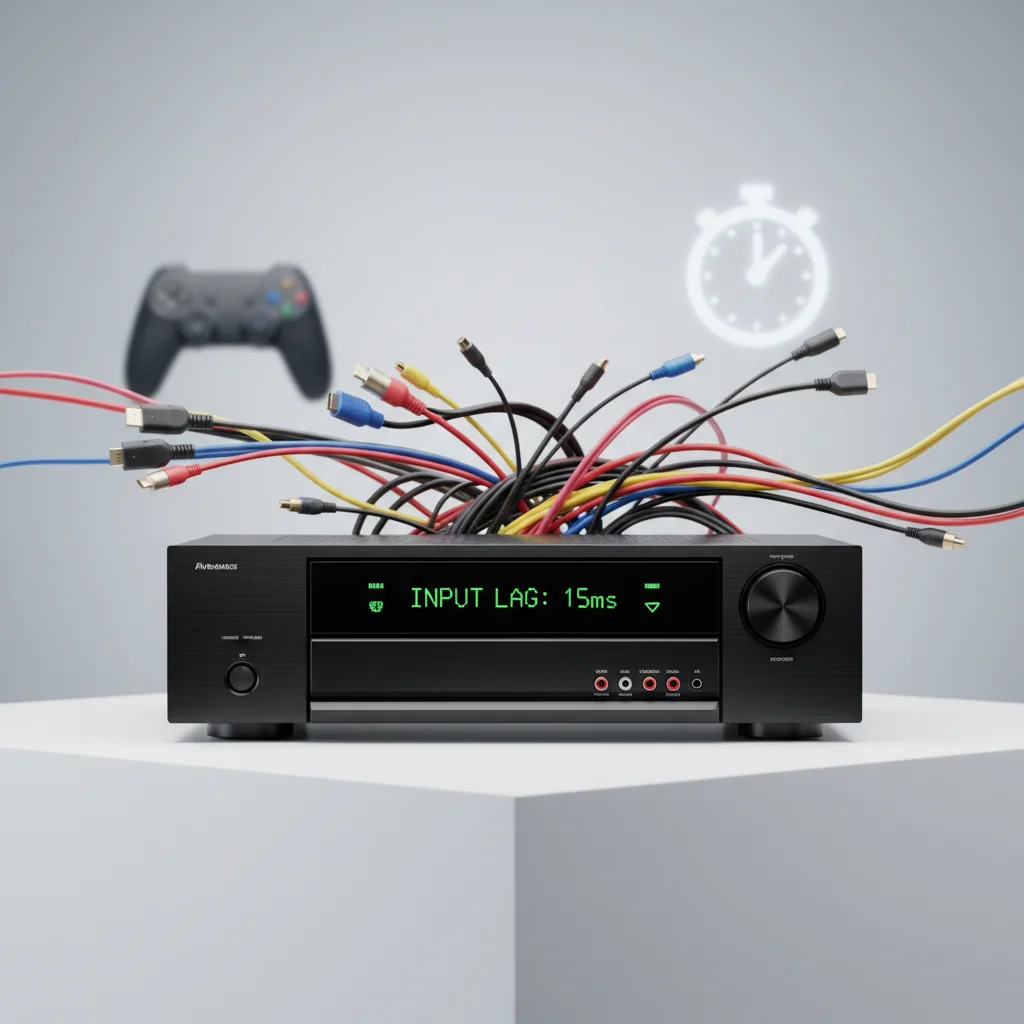
AV receiver input lag refers to the delay between a signal entering the receiver and the corresponding audio or video output. For most casual viewing and listening, an input lag of up to 50 milliseconds is generally acceptable. However, for competitive gaming or critical audio synchronization, a lag of 20 milliseconds or less is highly recommended to ensure a seamless and responsive experience.
Understanding Input Lag in AV Receivers
Input lag is a critical factor for many users, especially gamers and those sensitive to audio-video synchronization issues. It’s the time it takes for your AV receiver to process an incoming signal and send it to your display and speakers. This processing can include video upscaling, audio decoding, and various sound enhancements. While modern receivers are designed to minimize this delay, some level of latency is inherent in any digital processing chain. For diy home buying guides on this site.
Different components in your home theater setup contribute to overall latency. Your TV or projector, gaming console, and even the cables you use can add to the total delay. The AV receiver’s role is significant because it often handles both audio and video signals, making its processing time a key determinant of the final lag experienced.
Factors Influencing AV Receiver Input Lag
Several factors can influence the amount of input lag an AV receiver introduces. The complexity of the audio and video processing is a primary contributor. Features like advanced video upscaling, noise reduction, and sophisticated surround sound decoding can add milliseconds to the processing time. Receivers with ‘Game Mode’ or ‘Low Latency Mode’ are specifically designed to bypass or minimize these processes for faster response times.
The quality and age of the receiver’s internal components also play a role. Newer receivers often feature more powerful processors capable of handling signals with less delay. Additionally, the type of input and output connections can affect lag. HDMI connections are generally optimized for minimal latency, but older analog connections might introduce more delay due to additional conversion steps.
Measuring and Minimizing Input Lag
|
Our Picks for the Best AV Receiver in 2026
As an Amazon Associate I earn from qualifying purchases.
|
||
| Num | Product | Action |
|---|---|---|
| 1 | Sony STRDH590 5.2 Channel Surround Sound Home Theater Receiver: 4K HDR AV Receiver with Bluetooth,Black |

|
| 2 | Pyle 5.2 Channel Hi-Fi Home Theater Receiver - 1000W MAX Wireless BT Surround Sound Stereo Amplifier System with 4k Ultra HD Support, MP3/USB/DAC, Ideal for Immersive Home Audio Experience |
|
| 3 | Onkyo TX-RZ30 9.2-Channel AV Receiver - 100 Watts Per Channel, Dirac Live Out of Box, Works with Sonos Certified, THX Certified and More |
|
| 4 | Denon AVR-X1800H 7.2 Channel AV Stereo Receiver - 80W/Channel, Wireless Streaming via Built-in HEOS, WiFi, & Bluetooth, Supports Dolby Vision, HDR10+, Dynamic HDR, & Home Automation Systems |
|
| 5 | Denon AVR-S570BT AV Receiver 5.2 Channel 8K Ultra HD Audio & Video, Stereo Receivers, Denon AVR Wireless Streaming Bluetooth, (4) 8K HDMI Inputs, eARC, HD Setup Assistant |
|
| 6 | Sony STRDH190 2-ch Home Stereo Receiver with Phono Inputs & Bluetooth Black |
|
| 7 | YAMAHA RX-V385 5.1-Channel 4K Ultra HD AV Receiver with Bluetooth |
|
| 8 | Sony STRDH590 5.2 Multi-Channel 4k HDR AV Receiver with Bluetooth (Renewed) Bundle with 3 YR CPS Enhanced Protection Pack |
|
| 9 | Sony STR-AN1000 7.2 CH Surround Sound Home Theater 8K A/V Receiver: Dolby Atmos, DTS:X, Digital Cinema Auto Calibration IX, Bluetooth, WiFi, Google Chromecast, Spotify connect, Apple AirPlay, HDMI 2.1 |
|
| 10 | Denon AVR-X1700H 7.2 Channel AV Receiver - 80W/Channel, Advanced 8K HDMI Video w/eARC, Dolby Atmos, DTS:X, Built-in HEOS, Amazon Alexa Voice Control |
|
While most AV receivers don’t provide a direct input lag measurement in their specifications, you can often find reviews or dedicated tests that provide this data. For a DIY approach, you can use a high-speed camera to record a source device’s output and your display’s output simultaneously, then compare the timestamps. However, this method requires specialized equipment and can be complex.
- Enable Game Mode: Many receivers offer a ‘Game Mode’ that prioritizes low latency by disabling non-essential processing.
- Bypass Video Processing: If your TV handles video processing well, consider setting your receiver to pass through video signals without additional processing.
- Use Direct Connections: Whenever possible, use direct HDMI connections from your source device to your receiver.
- Update Firmware: Ensure your AV receiver’s firmware is up to date, as manufacturers often release updates that improve performance and reduce latency.
- Check Cables: High-quality, certified HDMI cables can help ensure signal integrity and minimize potential delays.
Acceptable Lag for Different Activities
The definition of ‘acceptable’ input lag largely depends on the activity. For watching movies or TV shows, a lag of up to 50ms is usually imperceptible. Our brains are quite good at compensating for minor discrepancies in audio and video synchronization in these contexts. However, for fast-paced action movies or scenes with precise lip-sync, even a slight delay can become noticeable and distracting.
For competitive gaming, where split-second reactions are crucial, an input lag above 20ms can put you at a significant disadvantage. Professional gamers often aim for systems with less than 10ms of total latency across all components. Casual gamers might find up to 30ms tolerable, but anything higher can lead to a frustrating experience. Consider thefor a receiver with excellent low-latency performance.
The Impact of Lag on Audio-Video Synchronization
Beyond gaming, input lag can also affect the overall immersion of your home theater experience by causing audio-video synchronization issues. If the audio arrives significantly before or after the video, it can be jarring and detract from the realism of the content. Many AV receivers include a ‘lip-sync’ or ‘audio delay’ adjustment feature, which allows you to manually compensate for delays introduced by other components in your system.
While these adjustments can help, they are often a workaround for inherent latency. The ideal scenario is to minimize lag at every stage of your setup. Investing in a receiver known for its low latency processing, such as the, can significantly improve your overall enjoyment and prevent the need for constant manual adjustments.
